

In 2006, my first wife left me. I learned afterwards that she had spent two years using my money to pay off her loans while conducting an affair. By the time she asked for the divorce, she had arranged her exit. I was the last to know I was in the story.
In 2010, I was passed over for Managing Director at Goldman Sachs. I was doing good work. The person who got the role was doing good work too. The difference wasn’t performance, and I think I knew that even then, though I couldn’t have said what the difference actually was.
Years later, at a different firm, a relationship I had spent a long time building was reassigned. I had assumed the decision would be made on the record, and that the record would speak for me. Someone else assumed nothing and made his case. I found out after it was settled.
Three different decades. Three different domains. The same feeling each time: I had lost something, and the loss had happened somewhere I hadn’t been looking. In a room I wasn’t in.
I spent a long time thinking this was bad luck. Then a character flaw — that I was too trusting, too direct, constitutionally unsuited to the calculation that comes naturally to certain people. Neither felt right.
The answer came from three books I should have read earlier. One written in China around 500 BC. One in a farmhouse outside Florence in 1513 by a man just tortured by the government he’d served for fourteen years. One in Prussia in the early nineteenth century by a general who had watched everything he believed about warfare collapse in the face of Napoleon.
None of them wrote about divorce, investment banking, or client relationships. All three described the same thing: the gap between the game you think you’re playing and the game that’s actually being played. And the cost of not knowing the difference.
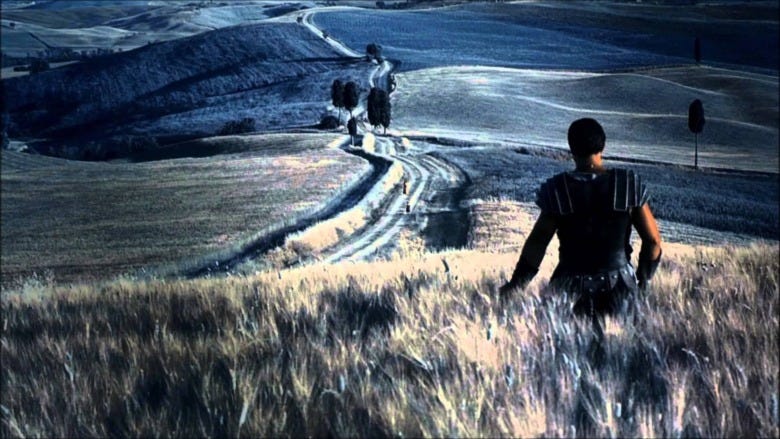
Niccolò Machiavelli wrote The Prince after being arrested, accused of conspiracy, tortured on the strappado — a device that dislocates your shoulders — and released into exile. He was forty-four, broke, and politically finished. The Prince was his attempt to think clearly about power after watching everything he understood about it fail.
Sun Tzu wrote The Art of War advising warlords in a China fractured into competing kingdoms. A general who gave bad advice didn’t get a lower grade. He got executed.
Carl von Clausewitz watched Napoleon dismantle the Prussian military — the army he served, the institution he believed in — with a speed that suggested everything he’d been trained in was wrong. On War — which he spent decades writing and never finished — is what a brilliant man writes when he decides to understand not just how battles are won but why intelligent people keep losing them.
These are not texts written by professors in comfortable chairs. They are the work of men who paid for their understanding in the hardest currency available.
Sun Tzu was dead a thousand years before Machiavelli was born. Clausewitz wouldn’t arrive for three hundred years after that. They never read each other. They couldn’t. Open the three books to any page that touches the same subject and you find yourself reading the same argument in different costumes. When people separated by twenty-five centuries and three languages arrive at the same conclusions, they are probably not describing a theory. They are describing a feature of the territory.

In the spring of 2026, Iran closed the Strait of Hormuz — the passage for twenty percent of the world’s crude oil — without winning a single significant military engagement. Not with a naval blockade. With cheap drones, selective strikes, and a statement from an IRGC commander that any vessel crossing would be set ablaze. Insurance companies repriced overnight. Shipping firms rerouted. Within days, tanker traffic dropped by ninety-seven percent.
The American response was to send carrier groups. Overwhelming force, competently applied. By every military measure, the United States won every engagement.
And yet, as Christopher Wood of Jefferies observed this week, Iran is now operating what he called a “profitable toll booth system” in the strait — collecting fees for passage, denominated in renminbi. Not dollars. The ceasefire was brokered not by Washington but by Pakistan. India, China, and Turkey are negotiating directly with Tehran. The strait was, Wood noted almost in passing, “fully operational before the attack on Iran.”
Iran was never fighting a military war. It was fighting a narrative one. The story it was telling — we are the gatekeeper, not the gatekept; sovereign nations negotiate with us, American clients ask permission — was reorganising global energy flows more effectively than the most powerful navy in history.
Force can compel behaviour. It cannot compel belief. In the long run, belief determines behaviour. American missiles could destroy infrastructure. They could not rewrite what India and China decided to believe about their relationship to Washington. Those countries are not responding to the military facts. They are responding to the story the military facts created — and that story was written by Tehran, not the Pentagon.
Every manager who has ever won an argument and lost a team understands this. They just didn’t have the language for it.
Sun Tzu: all warfare is based on deception — what your opponent believes about the situation is more decisive than the situation itself. Clausewitz: moral forces dominate physical ones — the story a conflict tells about who is strong and who is merely armed outlasts any military advantage. Machiavelli, most bluntly: it is absolutely imperative that a ruler seem to possess virtue, whether or not he does. Seeming is governing.
Force wins battles. Narrative wins the aftermath. The aftermath is what the next fifty years are built on.
The person who ended up with that relationship didn’t have a better one than I did, not at the start. What he had was a story: a clear, confident account of why he was the right person, delivered at exactly the moment the question was open. I was waiting to be chosen. He was making the case. The decision-maker didn’t choose between two people. He chose between two stories. One of us gave him one. I gave him a vacancy.
By the time I understood, it was settled.

All three books agree on something that surprises most people who read them: the people are your only real fortress.
Everyone assumes these books are manuals for elite manipulation. Read them carefully and you find something different. Your best fortress, Machiavelli writes, is not to be hated by the people, because even if you do have fortresses, they won’t save you if the people hate you. Sun Tzu: the army animated by unified spirit defeats the larger force. Clausewitz: passion belongs to the people — it is the first element of his trinity, the one that makes everything else possible or impossible.
You can be feared. You cannot be hated. That distinction is the difference between an authority that survives adversity and one that collapses the moment things get difficult.
At Goldman, the cross-ruffing process exists precisely because the firm understands this. Your promotion to Managing Director isn’t decided by your direct superior alone. It is decided by a room full of partners across divisions — people who may have had one conversation with you, or none, but who have formed a view. That view travels. It was formed not in the moments you thought mattered — the deals, the revenues, the presentations — but in the corridors, the offsites, the small interactions you assumed nobody was watching.
I had good revenues. I had a poor reputation in rooms I wasn’t in. I didn’t know those rooms existed until I needed something from them. The people who got promoted weren’t necessarily better bankers. They were better liked — not sycophantically, genuinely. People wanted them to succeed. That desire is load-bearing. It speaks for you when you’re not present.
You are never in the most important room. The question is what that room is saying about you while you’re gone.
Sun Tzu: the general who wins makes many calculations before battle. The general who loses makes but few. Clausewitz devoted an entire chapter to friction — the gap between the plan and the reality — and his conclusion was not that friction can be eliminated but that it can be anticipated. The leader who has already decided what he will do when things go wrong moves through friction. Everyone else is consumed by it. Machiavelli on the Italian rulers who lost their states: they did not fail in war. They failed in peacetime. They didn’t imagine anything could change while the weather was fair. When the storm came, they ran.
There is a particular quality to the memory I keep returning to from that marriage. We were planning a holiday, sometime in the second year, talking about where we’d go the following summer. She was engaged, enthusiastic, full of suggestions. I remember thinking how good things felt. I now understand I was watching a woman who had already decided there would be no following summer plan with me, discussing it anyway, fluently, without hesitation. I wasn’t reading the room. I wasn’t even in it.
She was preparing her exit for two years before she asked for it. The loans were paid off. The affair was established. The story she would tell — to herself, to others, to the court if necessary — had been composed and revised. When she finally moved, she moved cleanly.
Not because she was malicious. Because she was prepared.
The person who is always reacting is always losing. Not because reaction is stupid, but because the person forcing you to react has already chosen the terrain, the timing, and the terms. You are playing catch-up in a game whose opening moves happened without you.

Sun Tzu: if you know the enemy and know yourself, you need not fear the result of a hundred battles. If you know yourself but not the enemy, for every victory gained you will also suffer a defeat. If you know neither the enemy nor yourself, you will succumb in every battle.
Self-knowledge comes first. Not intelligence about the opponent. Not strategic analysis. The prior question — who are you, actually? What are your real strengths? Where are your blind spots? How are you perceived by people who have no reason to flatter you? — must be answered honestly before anything else can be asked usefully.
Machiavelli: the rulers who lost their states were not stupid men. They were men whose self-image had drifted so far from reality that they couldn’t accurately assess the situation they were in. The gap between who they thought they were and who they actually were — in terms of reputation, leverage, allies, and enemies — was the gap through which everything fell.
At Goldman I believed with complete sincerity that my revenues would speak for themselves. That belief was not arrogance. It was a theory of how the institution worked: perform, generate returns, advance. It was also wrong. What made it dangerous wasn’t the wrongness — wrong beliefs can be corrected. What made it dangerous was that I never tested it. I never asked someone I trusted: how am I actually perceived here?
Self-knowledge is not self-criticism. It is an accurate map of your actual position, including the parts you’d rather not see.

Sun Tzu: there is no instance of a country having benefited from prolonged warfare. This appears before strategy, before terrain, before deception. Duration is the enemy. Clausewitz: speed is the stronger party’s weapon. The wearing-out strategy belongs to the weaker side. Every day you allow a conflict to continue is a day the other side is recovering, adapting, building new narratives. Machiavelli: do what is difficult once, at the beginning, completely. Then stop. Severity dispersed over time is worse than severity concentrated at the start.
Niall Ferguson, writing this week, draws the parallel to Suez, 1956. Britain won every military engagement and lost the aftermath. Eden resigned three months after the ceasefire. Everyone knew after 1956 that Britain was finished as a top-tier power. The decisive variable was not military capability. It was the economic cost of duration — the sterling reserves draining, the oil stopped, the financial pressure compounding week by week until the position became untenable. The transition from victory to humiliation was measured in weeks.
The personal application is the one nobody wants to hear. The cold war that replaces a clean break. The legal dispute that drags for three years when a settlement in month one, painful as it would have been, would have cost everyone less. Whatever you’re grinding through right now is probably costing more than either outcome would have.
The marriage ending was brutal and then it was over and I could begin again. What I wasted was not the marriage. What I wasted were the months of low-grade confusion before the ending, when something was clearly wrong and I kept hoping patience and effort would resolve what only clarity could resolve.
Duration is not devotion.
I learned that late.
The easy conclusion from all of this: become more calculating. Trust less. Manipulate more. Play the game harder.
That is not what any of the three books say.
Machiavelli wrote The Prince after being tortured by the government he’d served for fourteen years. It is not a celebration of ruthlessness. It is what a wounded man writes when he decides to understand the world as it operates rather than as he was told it should. Sun Tzu is not advocating for deception. He is describing the operating environment so you can navigate it without being destroyed. Clausewitz spent his career trying to understand why intelligent people kept making the same catastrophic mistakes.
What all three share is a refusal to look away. That refusal is not cynicism. Cynicism concludes that because the world is imperfect, idealism is foolish, and gives up. These books demand something harder: hold your values intact, see clearly how the world works, and navigate the gap between the two with as much skill and honesty as you can manage.
I was not naive because I was stupid. I was naive because nobody teaches you this. We are raised on a model of the world where integrity is sufficient, merit is self-evident, and the quality of your work speaks for itself. That model is not wrong as a moral framework. It is dangerously incomplete as a practical one.
The person who reads these three books is not going to become cold or calculating. They are going to stop being surprised. Knowing these rules consciously is better than absorbing them by instinct. Instinct is pattern-matching — it fails in new situations. Conscious understanding can be applied deliberately, refined when wrong, transferred to new domains. You can take it into a boardroom, a negotiation, a difficult conversation with someone you love.

I don’t think about those three moments with bitterness anymore. I think about them the way you think about a course you should have taken earlier.
The tuition was high. The education was real.
The day I found out, I sat still for a long time afterwards. I knew something had happened. I just didn’t yet have the language for it. Now I do. I’m not sure whether that makes it better or worse. I think it makes it more useful.
The strangest part is what it does to old memories. I can look back at 2006 now and see, with complete clarity, the room I wasn’t in. It doesn’t change what happened. It changes what I do with what happens next.
A note on the books
All three are worth your time. They give you different things.
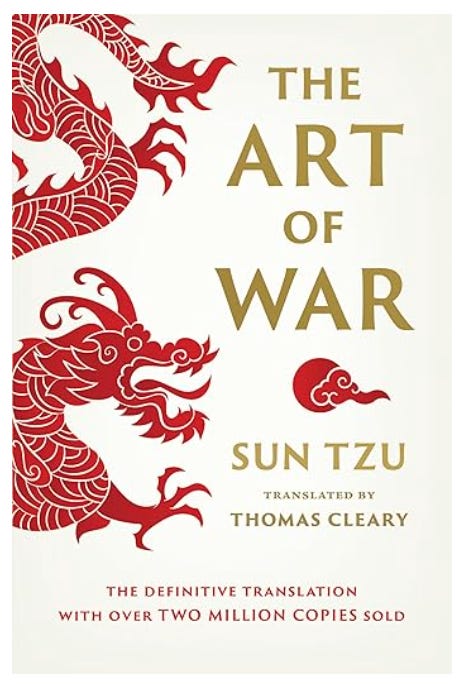
The Art of War by Sun Tzu — the Thomas Cleary translation is the best — is the shortest and most immediately practical. Thirteen chapters, an hour to read, a lifetime to absorb. Its central gift is situational awareness: the discipline of seeing the terrain, your opponent, and yourself with equal clarity before you act. Most people do one of the three well. Sun Tzu demands all three simultaneously.
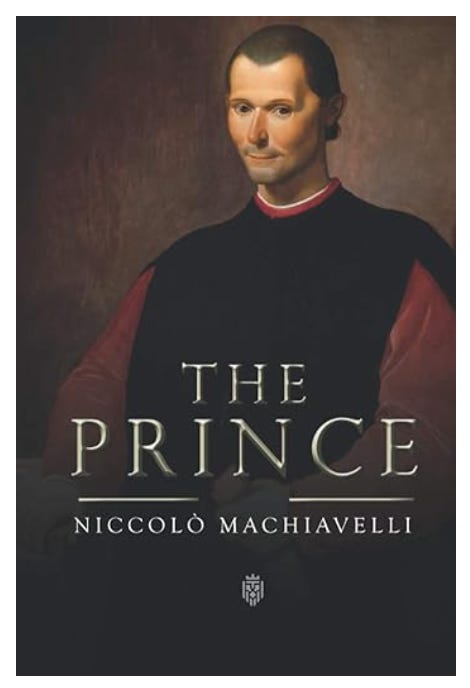
The Prince by Machiavelli — the Tim Parks translation for Penguin Classics gives you Machiavelli’s actual voice, which is direct, unsparing, and occasionally darkly funny — is the one most people think they understand and don’t. It is not a celebration of ruthlessness. It is a precise diagnosis of why well-intentioned people keep losing to people with worse values and better strategy. Read it as a field guide to the gap between how institutions claim to work and how they actually do.
On War by Clausewitz is the hardest of the three and the most rewarding. Don’t read it cover to cover — it was unfinished when he died and shows it. Read Books I and III, and the opening of Book VIII. His central insight — that any serious conflict operates simultaneously on the emotional, the probabilistic, and the rational-political plane, and that ignoring any one of these will destroy you — is the most sophisticated framework for understanding human conflict ever written. It will change how you read the morning news permanently.
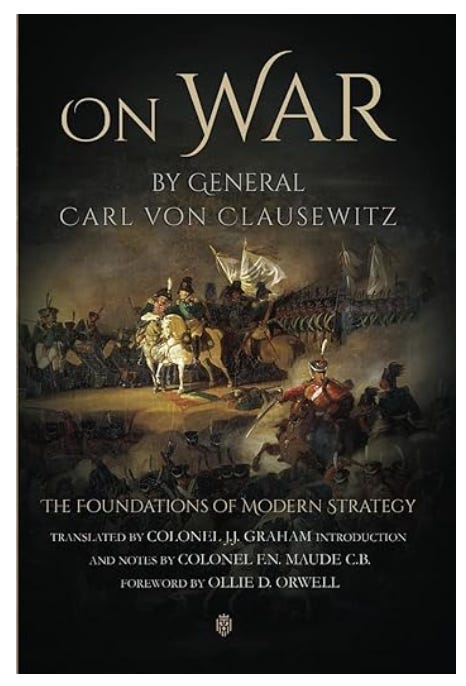
One thing none of them will tell you: they were all written by men who had already lost. That is where their authority comes from. It is, I have come to believe, where all the most useful knowledge about the world comes from.
Very well written. Thank you for sharing so openly. Sparked a lot of thoughts
Thank you very much for a magnificent essay. Your reflections always open doors and thoughts to our inner selves.