
You are a smart curious person, short on time and surrounded by noise.
The Curious Mind tries to offer the best signal to noise ratio across markets, technology and the good life. We hope to even surprise and inspire you with new beautiful ideas.
Believe it or not, that “♡ Like” button is a big deal. This email takes many hours to put together, including hours of sourcing, curating and writing. If it is helpful to you, then do me a favor and hit the “heart” button so I know it’s useful to you.
Quotes I Am Thinking About:
"Information is the resolution of uncertainty."
- Claude Shannon
"We can only see a short distance ahead, but we can see plenty there that needs to be done."
- Alan Turing
"In the long run, the history of information is the history of forgetting."
- James Gleick
We are living through a moment where the map has overtaken the territory. Our markets move based on algorithmic sentiment, our biology is being rewritten like software, and our daily lives are a constant negotiation with synthetic intelligence. We feel flooded, energised, and occasionally terrified by the sheer volume of data defining our existence.
To understand this moment, we don’t need another hot take on the latest LLM release.
We need to go back to the foundational text that explained how we got here. We need to revisit James Gleick’s 2011 masterpiece, The Information: A History, a Theory, a Flood.
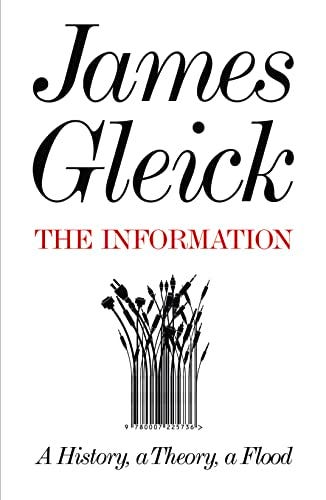
At Curious Mind, we look for the underlying structures that drive markets, technology, and human potential. Gleick’s book is nothing less than the biography of the fundamental unit of our universe: the Bit.
Reading it today feels less like reading history and more like reading the source code of our current reality.
Here is why this book matters more now than when it was published, and what its core lessons mean for the landscape today.
The Arc of the Bit
Gleick’s narrative is a 500-page odyssey that tracks humanity’s slow realisation that “information” is a distinct thing, separate from the medium that carries it.
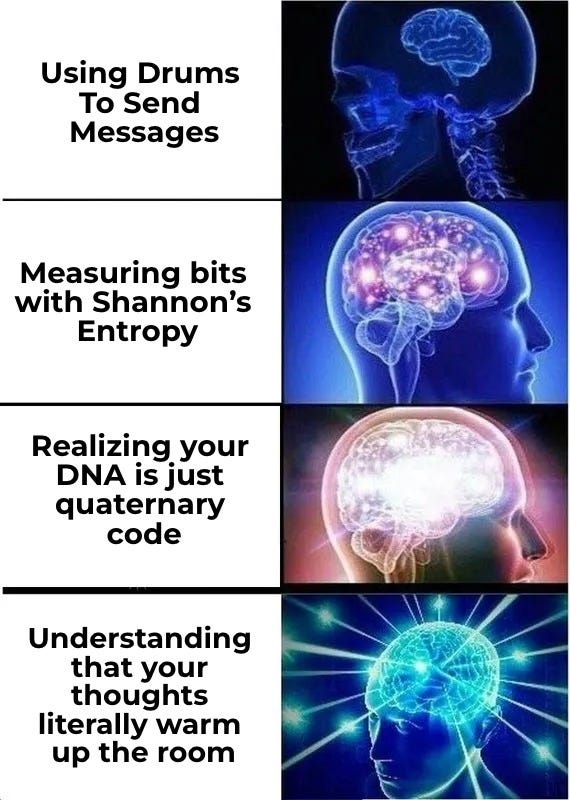
The story begins with African talking drums, a complex, redundant language that turned ephemeral sound into long distance communication. It moves through the invention of writing, which allowed information to survive the death of its author, and onto the electrical revolution of the telegraph, which decoupled information from physical transportation.
But the crux of the book, and its relevance today, lies in the mid 20th century, when geniuses like Claude Shannon, Alan Turing, and John Wheeler took information out of the realm of language and placed it firmly into the realms of mathematics and physics.
They proved that information isn’t just what we say; it’s what the universe is made of.
3 truths emerge from his history that are vital for understanding today:
1. Information is Physical (The Landauer Tax)
For centuries, we thought thoughts were ethereal and data was abstract. Gleick shatters this illusion by introducing us to Landauer’s Principle.
This physical law states that erasing a bit of information flipping a 1 back to a 0, releases a minimum, unavoidable amount of heat.
This is an important concept to understand and explains why datacenters run so hot.
Let’s use a “Balloon” Analogy. Information behaves like a gas.
The Random State: Imagine a bit that could be a 0 or a 1. It’s like a gas molecule bouncing around freely in a large balloon. It has lots of “options” (Entropy).
The Erase/Reset: Now, you want to force that bit to be a 0. This is like taking your hands and squeezing that balloon into a tiny, specific shape so the molecule has only one place to be.
The Result: When you compress a gas, it gets hot. Landauer’s Principle is simply the statement that compressing “possibility” into “certainty” generates heat.
Every time your computer ‘forgets’ something, it creates a tiny puff of heat.
The Landauer Equation: E ≥ kTln2
E: The energy “tax” you pay.
T: The temperature of the room (the hotter the room, the higher the tax!).
ln 2: The mathematical cost of choosing between two things (0 and 1).
The above also explains why you would want data centers in space, to minimise “T”.
“Thinking” (computation) isn’t free. It has a thermodynamic cost. Every processed bit warms the universe.
2. Biology is Digital Technology
Gleick masterfully reframes the discovery of DNA not as a biological breakthrough, but an informational one. Life is based on a quaternary (base-4) digital code. Nature discovered Shannon’s laws of redundancy and error correction billions of years before we did.
We aren’t magical beings made of special “life stuff.” We are exceptionally robust, self replicating message carriers.
Life is just information travelling through time.
3. The Shift from Scarcity to Filtering (The Flood)
Throughout history, information was scarce. The goal was to acquire it. Gleick argues we crossed a threshold where information became infinite and permanent, and therefore, its individual value dropped near zero.
We used to build barns to store the harvest. Now, we build dams to survive the overflow.
In the age of infinite bits, the person with the best ‘Delete’ button wins.
Implications for Today: Markets, Tech, and Humans
When Gleick wrote the book, these ideas were mostly theoretical physics or historical observations.
Today, they are the hard constraints and massive opportunities defining our world.
The New Economics of Energy (Market Implication)
We are running up against the hard wall of Landauer’s Principle. The massive AI clusters powering our economy are generating immense amounts of “information heat.”
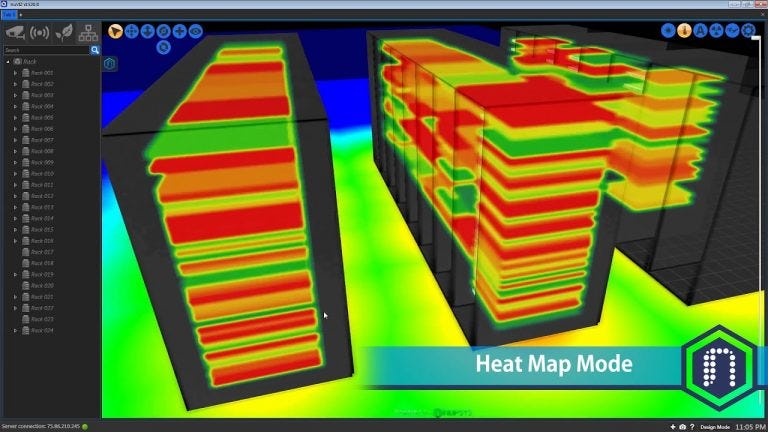
The market implication is clear: Energy is the new gold standard for compute. We are seeing the geography of markets shift toward areas with cheap cooling and abundant power.
The next trillion-dollar frontier isn’t just better AI models; it’s “Reversible Computing” hardware designed to dodge Landauer’s heat tax.
If you want to understand the future of tech stocks, look at thermodynamics.
Synthetic Biology as a Read/Write Industry (Technology Implication)
Gleick showed us that DNA is code. Today, we have moved from reading that code to writing it using generative AI models trained on biological sequences.
We are treating biology as an IT discipline.
We are debugging genetic diseases as if they were software errors. The implication for technology is a merger of silicon and carbon. The chip industry and the pharma industry are becoming indistinguishable, united by the underlying math of information theory.
The Crisis of Provenance and Filter Failure (Human Potential Implication)
We are living in the “Flood” Gleick predicted, exacerbated by AI’s ability to generate infinite, convincing redundancy. The internet is awash in synthetic noise.
Human potential isn’t defined by “knowing facts”, machines do that better.
Human value is now defined by provenance and judgment.
In a market flooded with synthetic media, the premium shifts to verifiable human trust and the ability to discern high entropy “signal” from algorithmic “noise.” Our role is no longer to be the creators of information, but its ultimate curators and judges.
The Secret About Our Future
"To think is to forget a difference, to generalise, to abstract. In the overly replete world of Funes, there were nothing but details."
- Jorge Luis Borges, Funes the Memorious
The most dangerous thing about the future isn’t that we will lose our information, it’s that we have lost the ability to forget.
We are finally feeling the weight of what Gleick calls the “Everyday Archive.”
For millions of years, human biological and social health relied on decay.
The Past: If you said something stupid in a pub in 1850, it vanished into the air. If a business made a mistake in 1920, the paper records eventually rotted. Forgetting was the “garbage collection” of the human species. It allowed us to reinvent ourselves.
The Present: We have built a world where erasure is harder than storage. Every tweet, every heart-rate spike, every search query is etched into the “silicon bedrock.”
The Future: “Forgetting” will be a higher level cognitive technology. By making information permanent and infinite, we have accidentally “clogged” the machinery of human progress. We are living in a state of permanent social heat because we can no longer “reset” the system.
Why this is a “Secret” for the Future:
1. The Thermodynamics of Regret (Landauer’s Revenge)
As we discussed with Landauer’s Principle (E ≥ kTln2), erasing a bit costs energy. In the future, “The Delete Button” will be more expensive than “The Save Button.” We are building a civilization that is thermodynamically incentivized to keep everything forever.
The civilization that cannot forget eventually overheats, both literally (in its data centers) and metaphorically (in its social friction). We are already seeing this.
2. The Return to “Secondary Orality”
We are moving backward to move forward.
By moving from long, static books to high-speed, rhythmic “streams” (TikTok, X, Slack), we are returning to the state of the Talking Drums.
We aren’t becoming “dumber”; we are becoming Oral again.
The most successful technologies won’t be the ones that store more data, but the ones that mimic the immediacy and rhythm of human speech. We are re-tribalising the planet through fiber-optic cables.
3. Meaning is a “Statistical Bubble”
As AI gets better at mimicking our statistical patterns (our redundancy), we will realise that much of what we called “Human Wisdom” was actually just predictable statistical noise. The future of “Human Potential” will be finding the tiny sliver of unpredictable “Surprise” that a machine cannot generate.
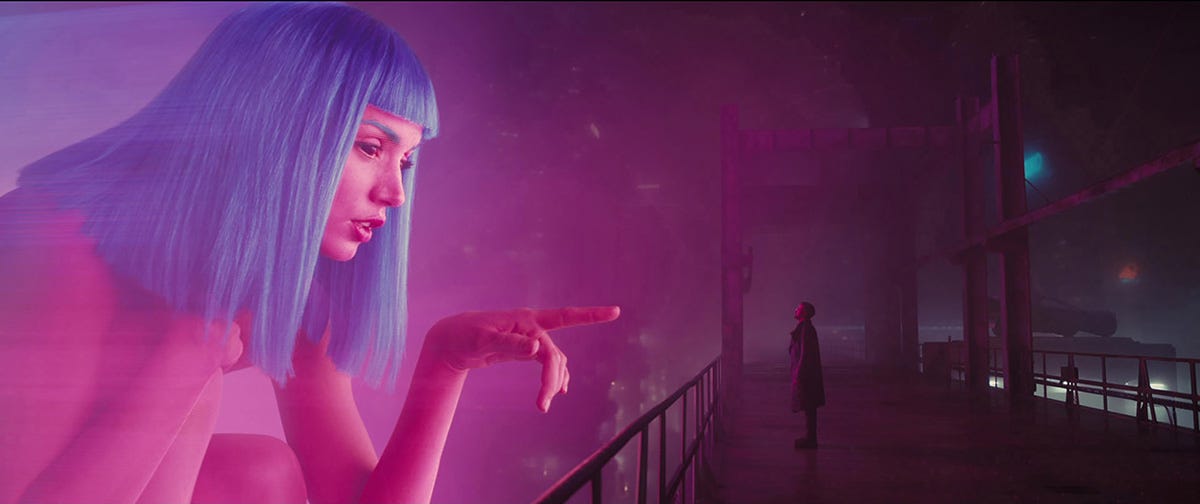
In the future, the most powerful people won’t be those who have the most data; they will be the ones who can curate the silence.
The ultimate human potential lies in our ability to break the patterns, ignore the archive, and provide the one thing a perfect Shannon-machine can never provide: A meaningful “No” to the infinite “Yes” of the data.
“Forgetting is essential to action of any kind.”
- Friedrich Nietzsche
I close with a reminder that if you enjoy reading The Curious Mind, please do me the huge favour of simply pressing the like button. It costs you nothing, means the world to me, and makes the algorithm work for us.