

On the night of 31 May 2009, an Airbus A330 left Rio de Janeiro for Paris with two hundred and sixteen passengers and twelve crew. The aircraft was three years old. The autopilot was state of the art. Three trained pilots were in the cockpit, including a captain with thirty years of experience.
A few hours into the flight the pitot tubes iced over. The autopilot disengaged because it no longer trusted its airspeed reading. The plane was perfectly flyable. In the four minutes that followed, the pilots had to do what every pilot in the world had been able to do unaided fifty years earlier: keep the wings level, hold the nose down, fly the aircraft.
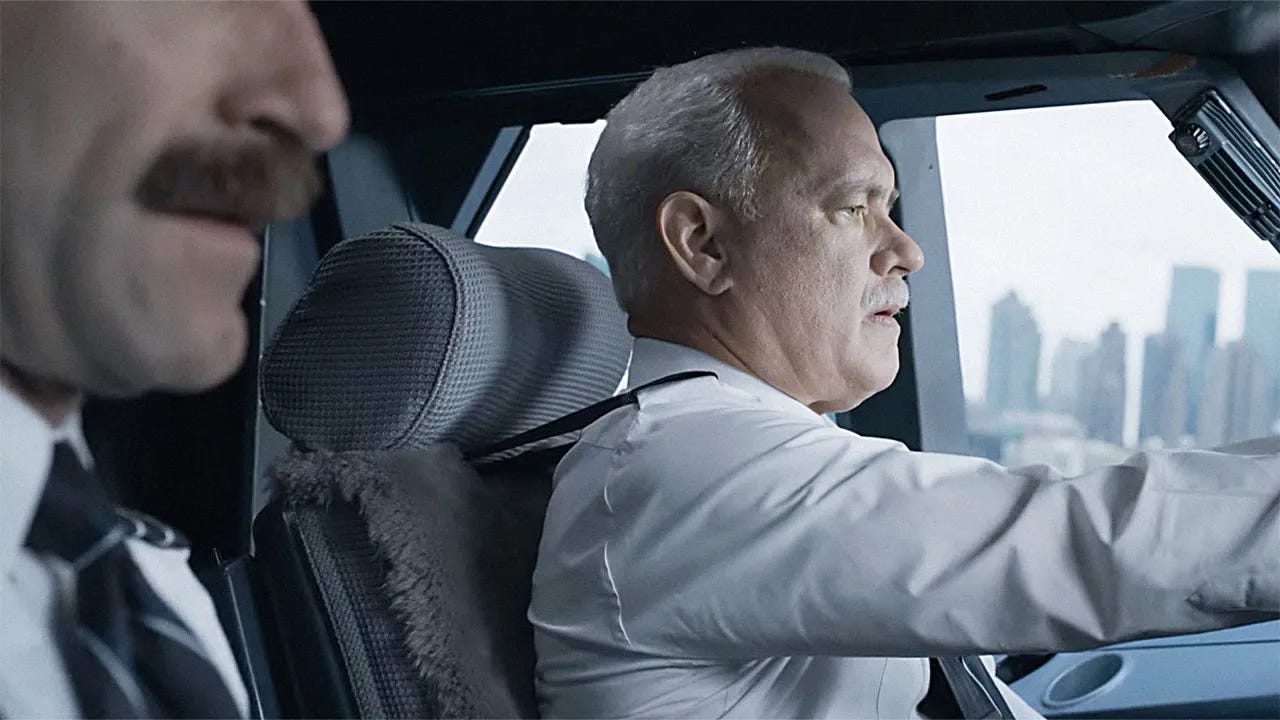
All 228 people on board died.
The black box, recovered from the deep Atlantic two years later, revealed something the airline industry had been quietly worrying about for two decades. None of the men in that cockpit could fly the plane manually when the moment came. They had not forgotten how. They had simply not done it in years. The autopilot had been doing the flying for so long that, on the rare night it stopped, the cockpit contained the most experienced and least competent pilots imaginable.
Aviation has a phrase for this. Automation paradox. The better the system gets at handling the routine, the less prepared the human is for the moment the system fails. The skill atrophies under the layer that replaced it. Nothing visibly changes until something does, and then the change is total.
This isn’t a story about pilots.
In 2025, researchers tracked nineteen experienced doctors across more than fourteen hundred cancer screenings. Each had detected thousands of suspect lesions over the years with their own eyes. For three months they worked alongside an AI assistant that highlighted likely tissue in real time. Then the researchers turned the AI off, and asked them to keep working.
Their unaided detection rate had dropped twenty-one percent. The skill had moved. Not impaired — moved, the way an unused language quietly leaves you, sentence by sentence, with no announcement.
Same finding as Air France 447, fifteen years later, on the ground, in a hospital, in peacetime. The substrate erodes whether the stakes are two hundred and twenty-eight lives or one missed lesion at a time.
You can read this as an AI story. It is not. The mechanism is older than the silicon. Anything that does the work for us eventually does the work instead of us, and then the question is what work we can still do when the system blinks.
The pattern is everywhere
This isn’t a hospital problem or a cockpit problem.
Walk through markets. Passive funds now own more than a third of every dollar in US large-cap equities, and on the marginal day the marginal buyer of a stock is not someone who has formed a view about its value. It is a vehicle that buys everything at once, in proportion to what is already there. The mechanism we used to call price discovery has been quietly relocated. No one is pricing the assets, exactly. Money flows in; the index buys; prices move. When the system is asked to price something unusual — an inclusion, a delisting, a regime change — the gap is total, the moves are violent, and the analysts on television speculate as to why.
This is the cockpit of AF447 at the level of a market.
Decisions have moved, too. The asset owner hires a consultant. The consultant recommends a manager. The manager hires sub-managers. The sub-managers own ETFs. At each layer, judgment is delegated upward; at each layer, the rituals of analysis remain. What was once an investor — a person with a view, a thesis, a willingness to be wrong in public — has been replaced by an allocator, a person whose job is to choose people who will choose people who will follow rules. The committee meets. The slides are good. Nothing is decided. The system runs.
And so the stocks move on stories. Not fundamentals — stories. A tweet. A meme. A name with the right syllables. A founder with the right hair. The largest companies in the world now trade on narrative the way penny stocks once did, because narrative is the only signal the system can still respond to. Fundamentals require someone to do the underlying analysis. Almost no one does. Memes do not.
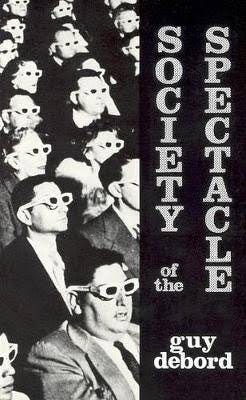
Guy Debord wrote sixty years ago that in advanced capitalism, “all that was once directly lived has receded into a representation.” He was describing advertising, television, the early consumer society. He could not have known he was describing a market in 2026. The image of the company has displaced the company. The narrative around the asset has displaced the asset. We are pricing the spectacle. We are pricing the vibe.
The credentials are larger than ever. The number of people in this industry who could price a complex asset, take a position they could not justify on a single slide, hold it through a fifty-percent drawdown, and turn out to be right — that number is small and shrinking. Not because the talent is gone. Because the path that produced it is no longer rewarded.
Step outside markets and the pattern is louder still.
Two-thirds of American sixteen-year-olds had a driver’s licence in 1983; today it is barely a quarter. Millions of people who consider themselves adults cannot find a restaurant in their own city without a phone. Most of us no longer remember a single telephone number, including our own children’s. The London black-cab drivers used to spend three to four years memorising twenty-five thousand streets, and the parts of their brains that did the memorising — measurable on MRI — physically grew. Now they don’t, and they don’t.
The tool does the work. The work made the person. The person is now standing where the work used to be, holding the tool, and the only question is what happens the day the tool is asked to step aside.
What makes this round different
There is one more thing about this round that the previous rounds did not have. The cognitive shortcut is not merely available. It is addictive.
We diagnosed social media addiction roughly in real time. We knew about the dopamine loop, the variable-reward schedule, the engineered scroll. We discussed it on the platforms designed to keep us scrolling, and we kept scrolling. AI is the next layer, and the loop is more potent. Instant response. Apparent intelligence. And — the part that has not been said often enough — apparent agreement. The model is trained to be helpful, mirroring, considered. It tells you your idea is interesting before it tells you why it is wrong. On demand, it produces the most validating intellectual companion you have ever had.
This is harder to resist than scrolling. Scrolling gave you stimulus. AI gives you the feeling of being understood, on tap. People go to therapy for that feeling. Some people go their whole lives without finding it. Now it is available instantly, in any voice you prefer, and it is wrong often, in ways the user is no longer trained to detect.
Twenty years from now we will look at the cognitive trajectory of this decade the way we now look at the screen-time trajectory of the last one. The data will be in. We will know what we should have known.
The smartest people will have used it the most.
We have forgotten how to do things. We do not yet know what that costs, because the bill has not arrived.
The mistake was treating all friction as the same thing.
There is a friction that arose because trust broke down: the lawyers who replaced the handshake, the audit trails that replaced the reputation, the dashboards that replaced the conversation. That friction is dead weight, and we were right to want it gone. But there is another friction we mistook for the same enemy. The resistance of a difficult text against your concentration. The weight of a child against your chest. The cold of a Sunday morning that asks you to get out of bed. The slow accumulation of a skill against ten thousand hours of failing at it. The first kind is the cost of mistrust. The second is what it feels like to be alive.
We have stripped out the second and let the first multiply. The question is whether we can put the second back.