

“A man put an eagle’s egg in the nest of a barnyard hen. The eaglet grew up with the chicks, scratched the earth for worms, clucked and cackled, and never flew more than a few feet. One day, old now, he saw a magnificent bird gliding across the sky. ‘Who’s that?’ he asked. ‘That’s the eagle, the king of the birds,’ said his neighbour. ‘He belongs to the sky. We belong to the earth, we’re chickens.’ So the eagle lived and died a chicken, for that’s what he thought he was.”
- Anthony De Mello, Awareness
Am I Doing This Right?
Being a good parent is probably the most important job I’ll ever have. It’s also the one I’m least qualified for.
I have two daughters. I think about them constantly, not the logistics, not the school runs and packed lunches, but the question underneath all of it. The one that keeps me up at night and that I suspect keeps you up too: Am I doing this right?
A couple of years ago, my ten-year-old came home from her tutoring session, dropped her bag by the door, and said, “Dad, what’s the point of all this?”
I didn’t have a good answer. I still don’t.
The Seventy Percent Problem
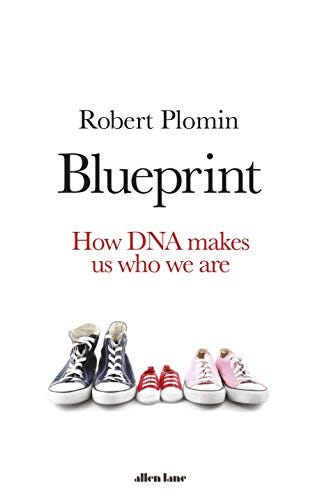
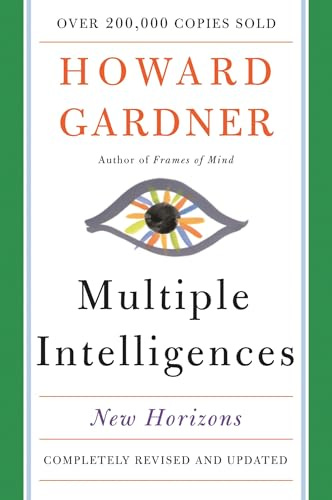
There’s an idea I encountered a few years ago that I haven’t been able to put down. It comes from three very different books: Bryan Caplan’s Selfish Reasons to Have More Kids, Robert Plomin’s Blueprint, and Howard Gardner’s Multiple Intelligences and once you absorb it, it rearranges how you think about everything.
Roughly seventy percent of the outcomes in our lives are shaped by genetics. Not determined but shaped. Genes don’t write the script, but they build the theatre. They decide the size of the stage, the acoustics, the lighting. Free will still exists. Effort still matters enormously. But the range of possible outcomes? That was set before our children drew their first breath.
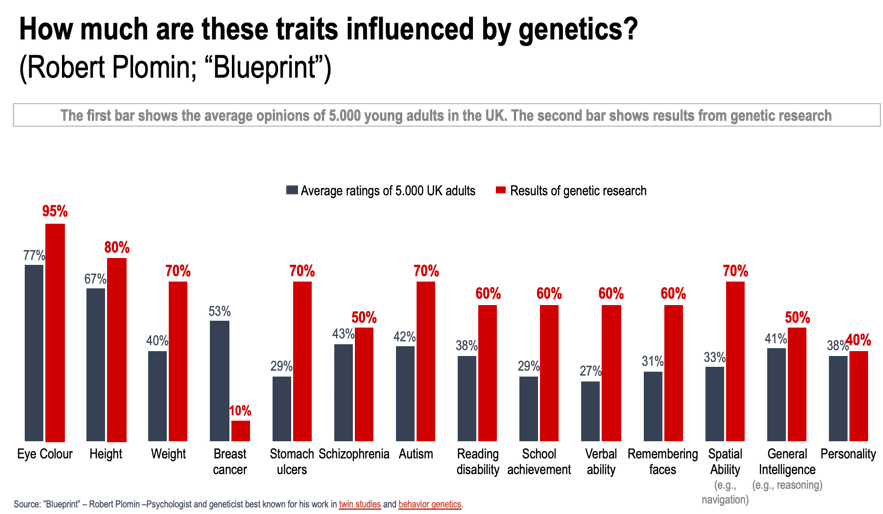
And here’s the part that stings: our behaviour as parents is far less influential than we think.
We do not create our children. We receive them.
We do not create our children. We receive them.
That’s a brutal thing to absorb when you’re spending your weekends ferrying kids to activities, your evenings negotiating homework, and your nights lying awake wondering if you said the right thing at bedtime. We pour ourselves into this work. We sacrifice sleep, money, careers, and sanity for it. We rearrange our entire lives around it. And the research gently taps us on the shoulder and says: most of what you’re agonising over won’t move the needle the way you think.
When I first encountered this idea, I resisted it. Hard. It felt like the science was telling me my job didn’t matter, that all the driving, the school fees, the carefully chosen words at bedtime were a kind of theatre I was performing for myself. I didn’t want that to be true. No parent does.
But I was wrong about what the science was actually saying. Because if it takes something away, it gives something back. Something far more beautiful.
The Gardener and the Chisel
So if seventy percent is set, if we don’t write the code, then what exactly is our job?
I think it might be the most beautiful job in the world: to discover who our children already are.
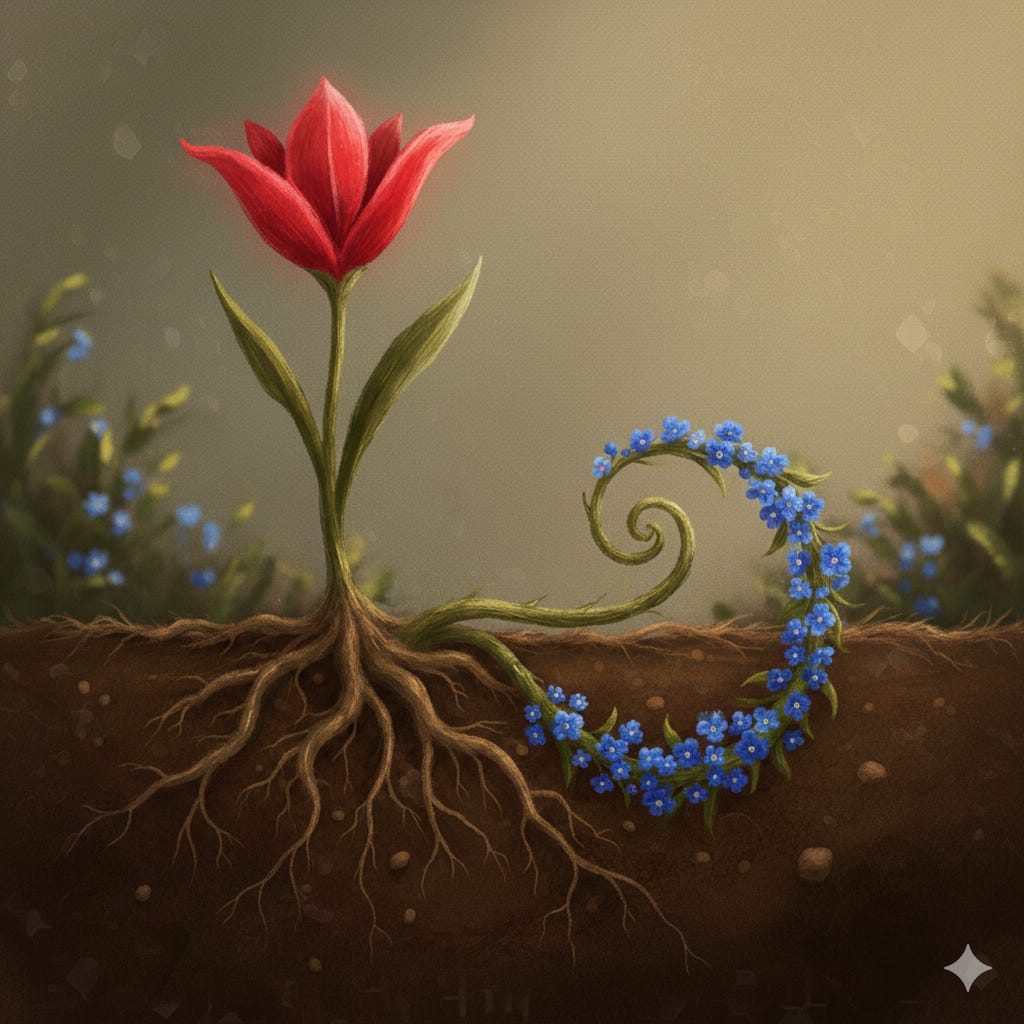
Each child arrives carrying a different gift. A different kind of intelligence. A different superpower that is theirs and theirs alone. We don’t plant the seed. The seed was already planted. Our job is to study the soil, find the light, and get out of the way.
I think about this with my own daughters. They are so different from each other that it sometimes amazes me they share the same parents. One will sit with a book for an hour, barely breathing. The other can’t be still until she’s run the length of the garden twice. One is cautious where the other is bold. One needs silence to recharge; the other needs people. Same home, same parents, same love, and two completely different human beings unfolding on their own terms.
The science didn’t make my job irrelevant. It made it clearer.
My job is not to shape them. My job is to see them. To pay attention. To notice what lights them up when nobody is watching. To catch the moments when they lose themselves in something, really lose themselves, and to think: there. That’s the thread. Follow it.
The shift from sculptor to gardener might be the most important reframe in all of parenting. A sculptor imposes a vision on raw material. A gardener studies what’s already growing and gives it what it needs.
I’m trying to be a gardener. Most days, I still catch myself reaching for the chisel.
The Question None of Us Ask Out Loud
Which brings me back to my daughter and her question.
What’s the point of all this?
She was preparing for the 11+ set of exams that, here in the UK, determines which secondary school your child attends. It involves months of tutoring, practice papers, and a level of pressure that would be comical if it weren’t so genuinely stressful. She was ten.
I saw all my friends doing the same thing. We start pushing our children to pass exams early. We benchmark them against each other while pretending we’re not. We swap tutor recommendations in hushed tones, like we’re sharing contraband. And through it all, a question hums beneath the surface that none of us want to ask out loud:
Is this actually good for them?
I don’t ask that dismissively. I ask it as a father who participated in the very system he’s questioning. I didn’t pull my daughter out. I didn’t cancel the tutor. I was complicit. But I was also paying attention to something I couldn’t unhear.
Sir Anthony Seldon, former headmaster of Wellington College and Brighton College, and someone who has spent a lifetime thinking about what education is actually for, put it simply: education should be about leading out the whole person, not delivering exam results.
Think about what schools actually test. Logical reasoning. Linguistic ability. Maybe two types of intelligence out of the eight or more that a human being can possess: creative, physical, social, moral, spiritual, personal. Exams don’t just ignore the rest. They teach children that the rest doesn’t count.
And here’s what stopped me cold: Sir Anthony argues that depression can stem from talents and potential that are never recognised. Never valued. Never even seen. When we reduce a child to a test score, we don’t just fail to educate them. We risk teaching them that the best parts of who they are are worthless.
The word “education” comes from the Latin educare: to lead out. Not to pour in. To lead out what’s already inside.
That etymology haunts me. Because so much of what we call education, so much of what I put my daughter through, is pouring in.
Since then, I’ve been trying to find small ways to lead out instead. It starts at the dinner table. Sir Anthony called family meals the secular churches of our time, sacred spaces not for worship, but for connection. Phones away. Eyes up. Tell me something that happened today that surprised you. It’s a small thing. But small things, repeated across years, become the architecture of a childhood.
Don't Clear the Road. Walk It Beside Them
Packy McCormick asked a version of the question I can’t stop asking: what do we actually teach our children when the world is changing faster than any curriculum can keep up?
His answer has stayed with me. When your child lights up about something, however obscure, however inconvenient, follow them into it. Help them go deeper, not wider, because the world doesn’t reward the well-rounded; it rewards the deeply alive.
Leave room for boredom, for solitude, for the kind of unstructured play that looks like nothing but builds everything. Celebrate the work, not the talent. And prioritise happiness, not as a destination, but as a daily practice.
None of that appears on any exam syllabus. It might be the only syllabus that matters.
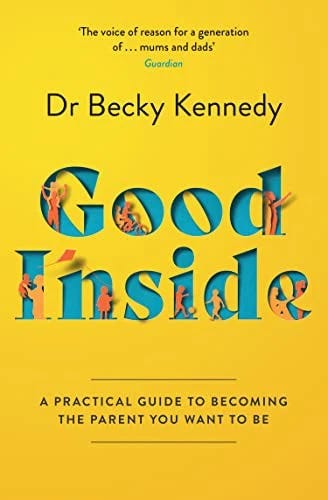
Dr. Becky Kennedy, the clinical psychologist behind Good Inside, comes at the same truth from the inside out. Her starting point is that both you and your child are good inside, which sounds obvious until you’re standing in a supermarket while your child screams at you, and you’re not thinking about anyone’s inner goodness. You’re thinking about survival. But Kennedy argues that everything flows from holding onto that belief, even when, especially when, the behaviour makes it hard.
I think about a night a few months ago. My daughter didn’t want to practice her violin. She was sitting on her room sulking. Every instinct in me wanted to say come on, just get it done. That’s what old me would have done. Push through. Keep the schedule. Treat the resistance as a problem to be solved.
Instead I sat down next to her and said, “Seems like you need a minute. That’s okay. Take your time.”
She looked at me like I’d said something in a foreign language. Then her shoulders dropped. She took a breath. Two minutes later, she picked up her bow. By now we were late to leave for dinner reservations. It didn’t matter. It didn’t matter at all.
What I was doing, what Kennedy taught me to do, was validating before correcting. Meeting her where she was before trying to move her somewhere else. If we skip that step, if we jump straight to you shouldn’t feel that way, children learn something that takes decades to unlearn: that their own inner world can’t be trusted. That their feelings are mistakes. I can’t think of a more dangerous lesson to absorb in childhood.
Kennedy’s deeper insight is about happiness itself, and it’s the idea I think about most.
We don’t cultivate happiness by clearing the path ahead of our children. We cultivate it by walking the path with them, especially the hard parts. Happiness isn’t the absence of difficulty. It’s the quiet confidence that you can survive difficulty. And that confidence only comes from actually surviving it, with support, but without rescue. Don’t clear the road. Walk it beside them. A child who discovers she can get through hard things becomes an adult who trusts herself. And that self-trust, built slowly across a thousand small moments of supported discomfort, is the foundation everything else is built on.
Even the way she handles lying reshaped how I think. When your child lies, the instinct is to confront. Kennedy suggests something more generous: see the lie as a wish. The child isn’t being deceitful. They’re wishing the world were different. You preserve their goodness, let things cool, and return later, gently: What would it take for you to be honest about this? It’s a tiny shift. But tiny shifts, repeated across a childhood, build an entirely different human being.
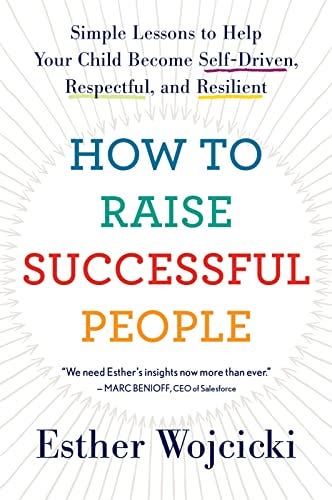
Esther Wojcicki sharpened all of this further, with a challenge I wasn’t expecting.
Wojcicki founded the Palo Alto High School Media Arts program and raised three daughters: one became the CEO of YouTube, another founded 23andMe, the third a renowned anthropologist.
Her uncomfortable observation is that our generation spends roughly twice as much time with our children as our parents spent with us.
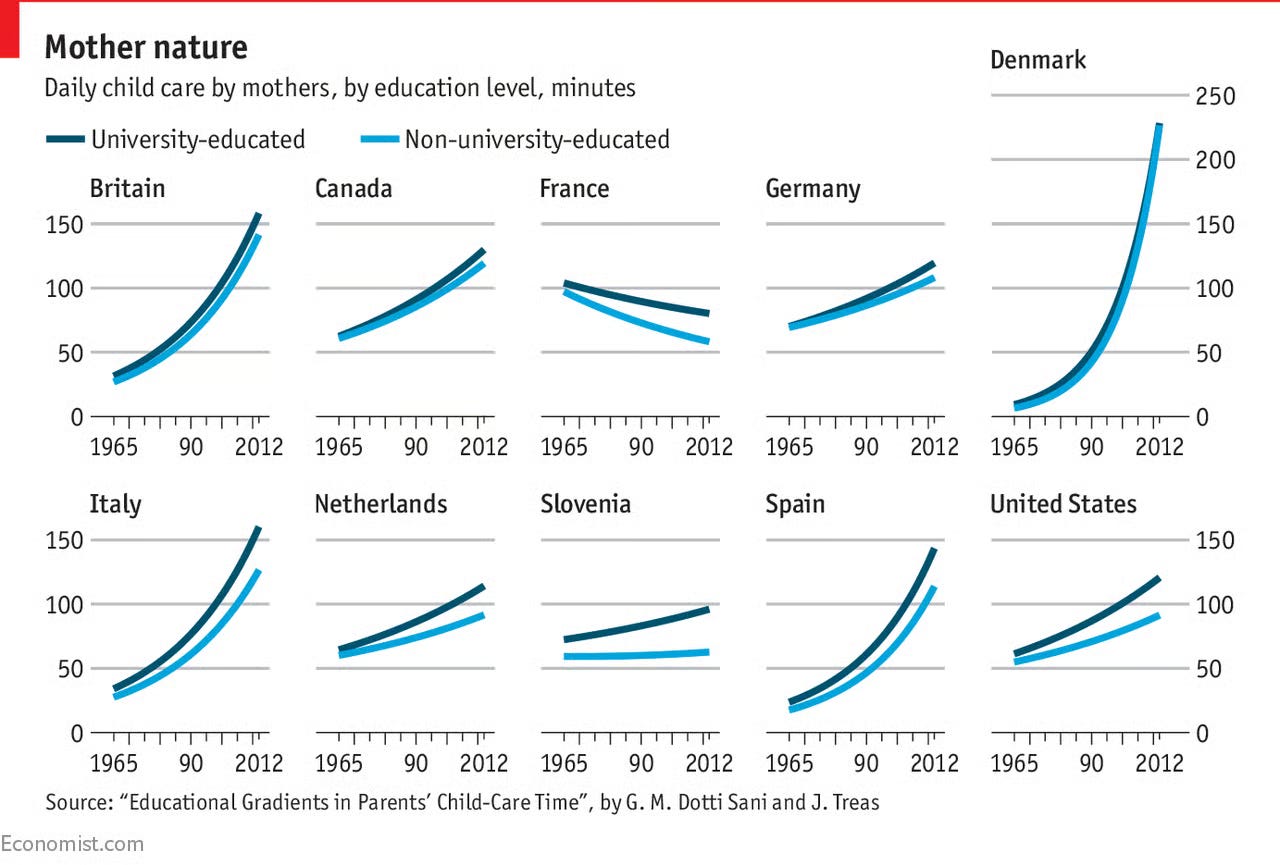
And while that comes from love, it might be quietly producing the opposite of what we intend. By hovering, micro-managing, and catching them before they fall, we may be raising adults who don’t know how to stand up on their own.
Berkeley now offers a university course called “Adulting.” Let that settle for a moment.
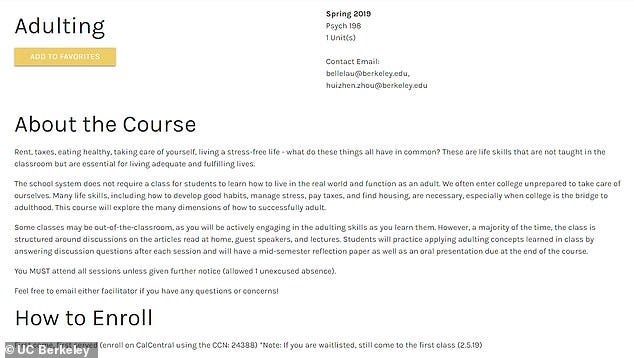
Her antidote is deceptively simple: trust your children with real decisions, even small ones. Respect their ideas enough to actually listen. Give them independence within structure, set the guardrails, not the road. Collaborate on the rules so they feel ownership, not just obedience. And underneath all of it, practise relentless kindness, because a child who knows that mistakes won’t cost them your warmth is a child who isn’t afraid to try.
Kindness. I keep returning to that word. It sounds soft. It isn’t. Choosing warmth over control when your child is at their worst, when every nerve in your body is telling you to shout, to clamp down, to punish, is one of the hardest things parenting will ever ask of you.
But when I strip everything else away, the exam anxiety, the school fees, the hushed comparisons with other families, what I want for my daughters turns out to be remarkably simple. I want them to grow up in a home where their curiosity is followed, not managed. Where their feelings are met before they’re fixed. Where they are trusted with increasing freedom and accompanied through inevitable failure.
Where the message, every single day, is: you are safe here. You are seen here. And who you are is enough.
No exam will ever test for that. But it might be the only thing that lasts.
It’s just love, applied with intention and practised with patience. Offered again every morning, even when you got it wrong the night before.
Who Are You?
But that was never really the question, was it?
The question was never can I change who my children are?
The question, the only question that ever mattered, is can I help them become the fullest version of who they already are?
Nurture isn’t about fighting nature. It’s about serving it. It’s about being the gardener who studies the soil, not the sculptor who battles the stone. It’s about watching closely. Listening carefully. And asking the most important question a parent can ever ask:
Who are you?
Not: who do I want you to be. Not: who does the exam board need you to be. Not: who would make my life easiest or my anxieties quieter.
Who are you?
My daughters don’t need me to be perfect. They need me to be present. They need me to see them, really see them, and to say, with my words and with my life: I see who you are. I think it’s wonderful. And I’m going to spend the rest of my days helping you become more of it.
The exams will come and go. The tutors will be forgotten. The test scores will yellow and fade. But the feeling of being truly known by a parent? Of being seen, not for what you achieved, but for who you are?
That stays. That’s the thing that echoes through a life.
I won’t master this job. I’ll get it wrong more often than I’d like. But I’m going to keep showing up, imperfect, unsure, and endlessly grateful for two extraordinary girls who are teaching me far more than I could ever teach them.
I need to think about these things daily. And so, I suspect, do you.
“Children are not things to be moulded, but people to be unfolded.”
- Jess Lair
What a wonderful post, my friend. Beautifully captures what we should all strive to be for our children. How hard that task is. Thank you.
As a brand new dad who spent the last few years untangling his own inner world through the lens of childhood attachment theory this post really resonated ❤️