
You are a smart curious person but short on time and surrounded by noise. The Curious Mind tries to offer the best signal to noise ratio across markets, technology and the good life.
If you missed the last issue:
Last weekend we shared the latest Curious Mind Research Letter with paid members, here is a free abridged version, it discussed the evolution of human society being driven by genes, then memes and now temes.

This week we cover a lot of ground, ending with a hospice doctor in Buffalo who asked his dying patients to rank what mattered most. Not being a burden came first and time with family second. Living as long as possible came 9th.
I listened to that in the same week as I spent reading and listening to four people argue about what happens when thinking costs about as much as the electricity that runs it, and the two have been knocking around together in my head ever since. Rao, Sosin, Manidis and Roberts disagree about plenty, but each of them ends up at some version of the same question.
When something precious gets cheap, what stays scarce, and who gets paid for it?
If you own any part of the AI build-out, that’s a question about your portfolio. The BCG piece on Gen Z belongs here too. The young are richer than they feel, mostly because of who they compare themselves with.
Kerr’s patients answer the question more briefly than anyone, so they get the last word.
Quotes I Am Thinking About:
“A wealth of information creates a poverty of attention.”
- Herbert Simon,
“If one only wished to be happy, this could be easily accomplished; but we wish to be happier than other people, and this is always difficult, for we believe others to be happier than they are.”
- Montesquieu
“Nowadays people know the price of everything and the value of nothing.”
- Oscar Wilde, The Picture of Dorian Gray
A. When Thinking Is Free
Two thought experiments to start.
Picture an English minister in the 1600s. 80% of his countrymen work the land, and he can’t imagine them doing anything else. Take them off the farms and you worry that you’ll have millions of useless mouths.
Now picture a futurist drawing a line from an amoeba to a monkey to Einstein, until it turns vertical somewhere near God.
Most AI anxiety sits between those two pictures, with the machine becoming a god and the humans becoming useless mouths. Two thinkers this week have taken that story apart from opposite ends, and both gave me a lot to think about.
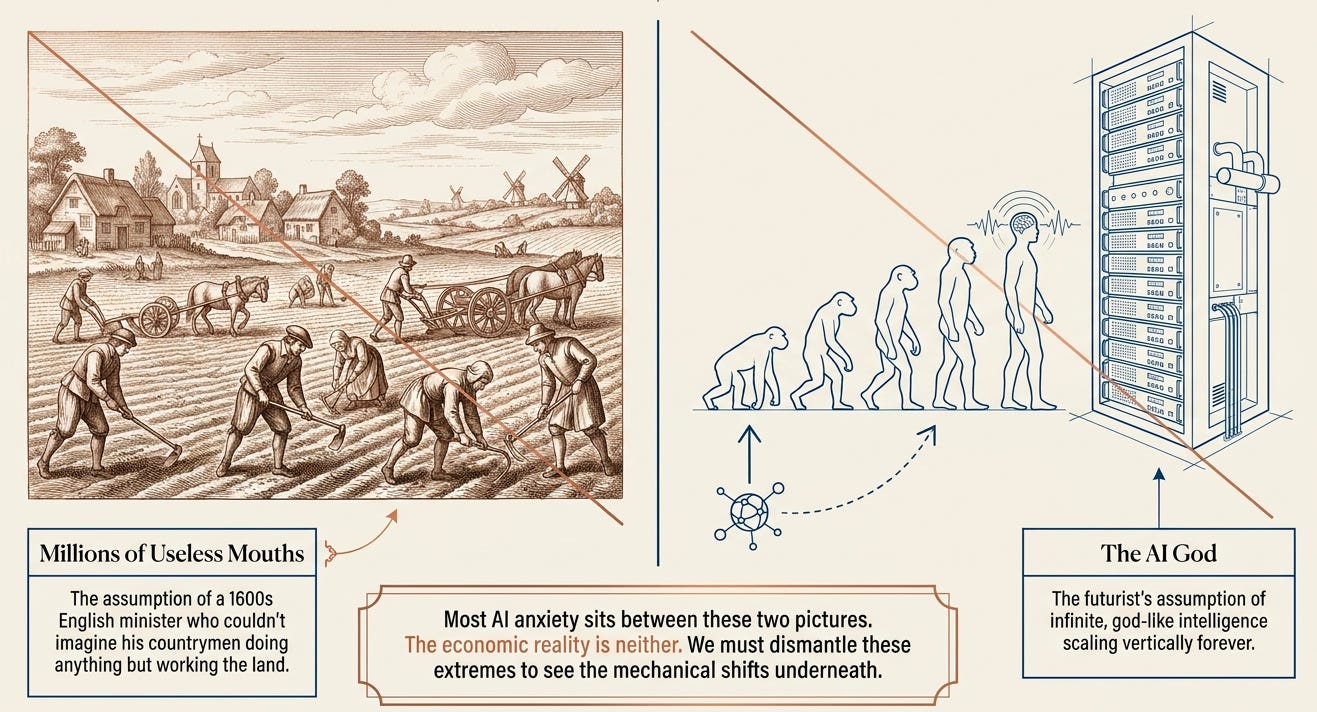
Venkatesh Rao at the Contraptions newsletter, comes at it from the human side. His essay Cognitive Mercantilism draws on Joyce Appleby’s history of capitalism to argue that we’re repeating the minister’s mistake.
Cliff Sosin comes at it from the machine side. He runs CAS Investment Partners and on Invest Like the Best he argued that intelligence has a ceiling and is heading for the price of a utility.
They agree on 3 things: Intelligence is about to become abundant, the people who use it will gain more than the people who make it, and human attention becomes the scarce input.
They disagree about how much anyone will pay for all that thinking. For anyone invested in the AI build-out, that disagreement is the part worth reading.
The 5 BIG IDEAS:
Intelligence is becoming a utility: Both think we’ve mistaken intelligence for treasure. Rao calls the error cognitive mercantilism. Before capitalism, wealth meant a fixed pile of land and gold, so rulers hoarded it and fought over supply. Today nations and companies treat clever brains and patents the same way, as bullion to be guarded. Almost nobody asks who might want to use the stuff.
Sosin attacks the treasure idea from another angle. We picture intelligence as the height of a tree, growing forever. He sees it as the roundness of a ball, which gets close to perfect and stops. Intelligence fills the gaps between known facts. In complex systems like weather, markets and crowds, though, small errors compound until extra brainpower stops helping. Past that ceiling, progress needs experiments, and experiments move at the speed of reality. But below the ceiling you get good intelligence for almost nothing.
Users win more than makers: Cheap food enriched the people who ate it far more than the people who grew it. Rao’s bet is that most people won’t need to produce much intelligence to consume a great deal of it. He pictures a shift from a world where 80% of minds do subsistence thinking, the routine mental work done just to get by, to one where 95% chase things nobody could afford to want before.
Sosin thinks the gains reach ordinary people through AI agents. Many businesses live off customers who can’t be bothered, like the bank with a stingy deposit rate or the garbage collector who adds 5% a year knowing nobody checks. An agent always checks. Anything you’d happily delegate, like an insured deposit, gets switched for 50 cents a month. Anything that needs your taste, like a favourite sweater, stays your call. Agents can even move a whole street onto one cheaper garbage collector, something neighbours never bothered to organise. Prices sharpen, margins thin and the surplus will go to customers.
Usage can boom while spending shrinks: This is where they part company. Rao sees demand with no obvious ceiling. When thinking pays more, people think more. Cheaper thinking creates more thinking.
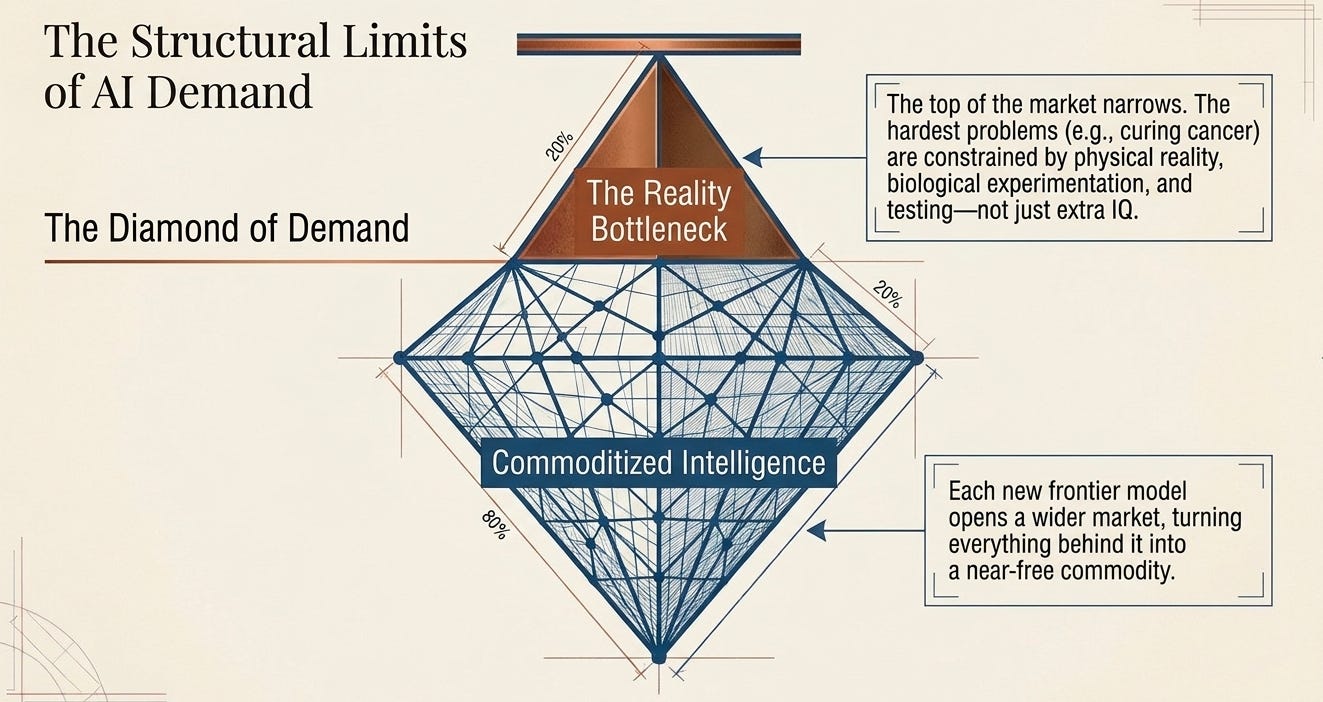
Sosin says Jevons describes only one stretch of a longer curve. Falling prices grow a market for a long time, then the price keeps falling and the market shrinks. He sees AI demand as a diamond. Each new frontier model opens a wider market while everything behind it commoditises. The top narrows because the hardest problems, curing cancer for instance, need contact with reality more than extra IQ.
Both can be right, because they’re counting different things. Rao counts thoughts consumed, and Sosin counts dollars paid. The internet did both at once. Traffic grew for decades while carrying it became a small business. Cogent carries over a fifth of the world’s internet traffic and even before its financial troubles was only worth $3bn. If intelligence follows that path, usage soars, and most of the value settles with users and with whoever owns what intelligence can’t make.
Sosin draws the investor’s conclusion: To bet on the build-out, you’d have to forecast demand, forecast how fast costs fall, find the link that captures the rent and beat everyone at that link. He can’t, so he’s leaving the railroad tycoons to others and looking for what came after the railways, the brands that rode them to national scale.
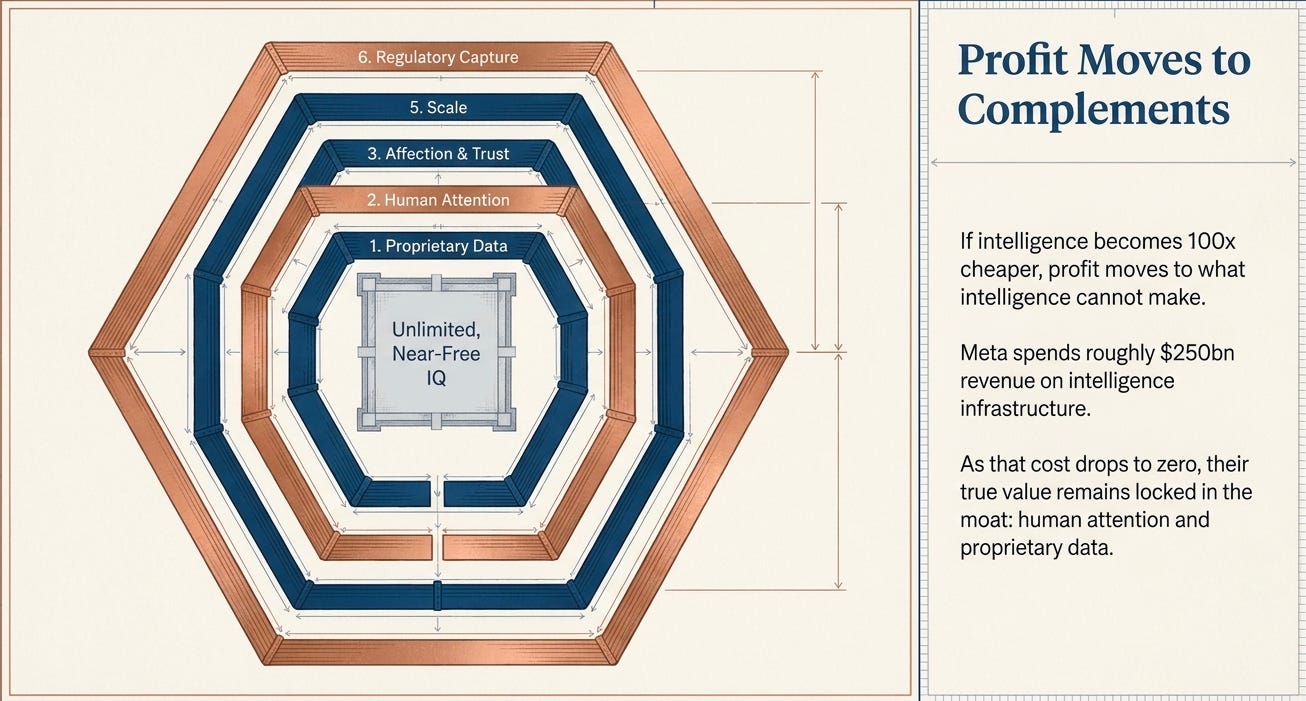
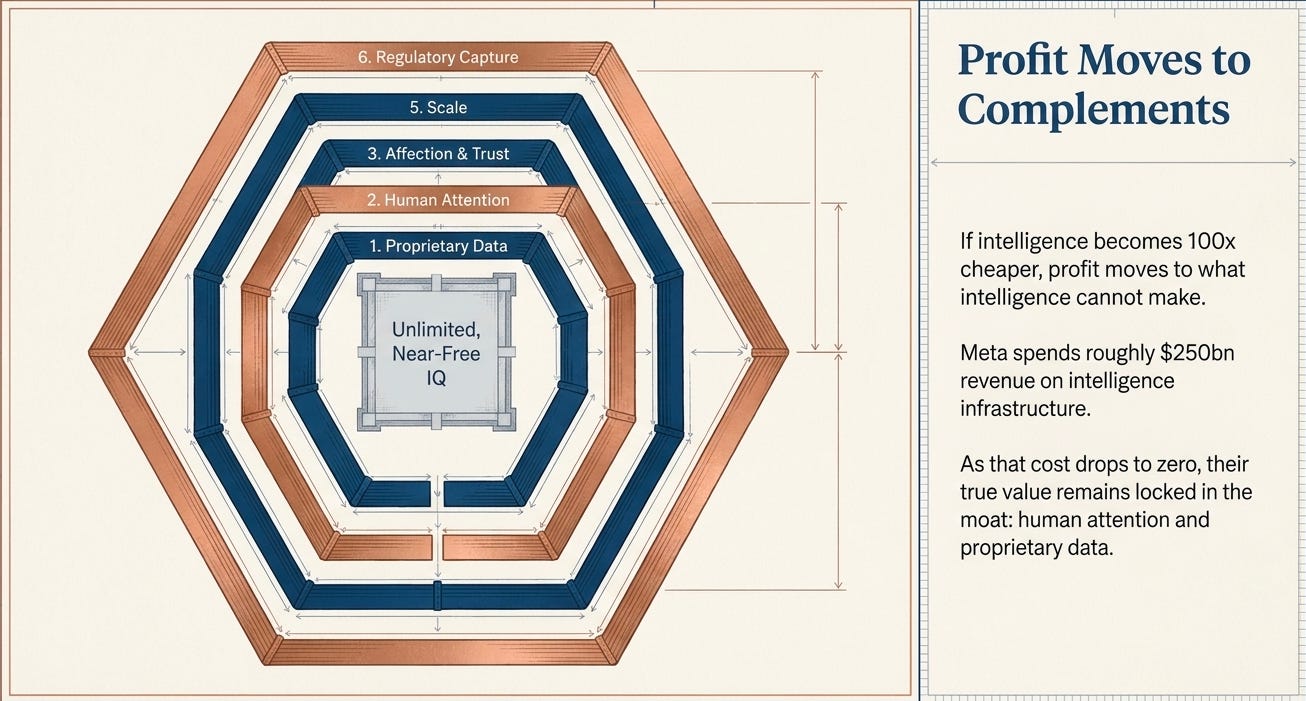
Profit moves to what intelligence can’t make: Sosin’s test is to give every company unlimited, near-free brainpower and ask what’s left. The answer is the complements to intelligence: data, attention, affection, physical proximity, scale and, more cynically, regulatory capture (this reminds me of our discussion of Hamilton Helmer's 7 Powers in January 2025)
Meta is his example. It spends nearly all of its roughly $250bn of revenue on intelligence in some form, from data centres to engineers. Make intelligence 100 times cheaper and those costs shrink, while its data and attention stay put. The losers are businesses selling crystallised intelligence, meaning software that freezes someone’s thinking into a product, and businesses that depend on customers not paying attention.
Attention becomes the scarce human input: In both accounts, cheap thinking makes people work harder. Rao’s precedent comes from Britain before the steam engine. Tea, sugar and bright Indian cottons reached ordinary homes, and people worked longer to afford them, stretching the working year from about 250 days to 300. Historians call this the industrious revolution. Rao expects a cognitive version. Many people who seem dim have never had a reason to think hard, because a good idea went nowhere without tools or access. With AI, “the returns on attention rise”, and people respond by paying more of it.
Sosin adds the condition. You need enough knowledge of your own to direct the machine. You can’t ask a model to treat a problem as a stochastic process unless you know what one is. He would teach children the foundations without AI, then hand them the tools and set work 100 times more ambitious. It’s the best time ever to start a company, he says, “until tomorrow.”

Curious Thinking: Three groups could collect the money when thinking gets cheap. Users take the surplus, as both men expect. Owners of complements take the margin. Owners of physical bottlenecks, meaning chips, power and grid connections, take the toll.
But the middle is the concern. Both men describe the destination better than the journey. Leaving the land took Britain more than a century, including the Engels’ pause, when wages stagnated while output grew. Agents could reprice whole industries in weeks. The professionals losing their premium are a political force, and Rao’s own framework predicts they’ll fight the way the nobility did.
Agents could become the new aristocracy. Sosin assumes your agent works only for you. Whoever owns the agent layer will be tempted to steer it, and being the default agent could pay the way being Google’s default did. Rao’s merchants may find new statesmen sitting on the trade routes.
B. Where Will The Returns Come From?
On a cold morning in November 1922, a sick and overworked Lenin stood before the Comintern to explain why he was letting private trade back into Soviet Russia. Peasants could sell their surplus again, and shops could reopen. None of it threatened the revolution, he told the delegates, because the state still held “all the commanding heights”. He meant the railways, the big factories and the telegraph lines that everything else ran through. We had discussed Daniel Yergin’s book by the same title in 2022.
This week Will Manidis and Joe Roberts borrowed his phrase for a book-length essay. Manidis left university for a Thiel Fellowship and built ScienceIO, a language-model company later bought by a large medical-records provider. He now writes and invests from New York. We discussed him in August.

The BIG Question they ask is:
The world is spending trillions to build intelligence if the price of that intelligence falls towards the cost of the electricity and chips that run it. Then, who ends up with the wealth it creates, and who can hold on to it for a generation?
Their answer runs to 8 parts and more than 150 footnotes.
The 5 BIG IDEAS:
The inventor rarely keeps the fortune: Gutenberg sold every one of his roughly 180 Bibles before they were printed, and he still went broke. The railway fortunes went to the people who financed and ran the lines. The authors think AI is at the same early stage. The first locomotives hauled iron and coal along private tracks for the mine owners who paid for them. The real money came later, once the network opened up and anyone could ship anything. Today’s AI revenue still comes from that kind of captive use: sophisticated firms dropping models into work they already do. Meanwhile the product is getting cheaper faster than any technology before it. Free open models trail the best paid ones by around 4 months.
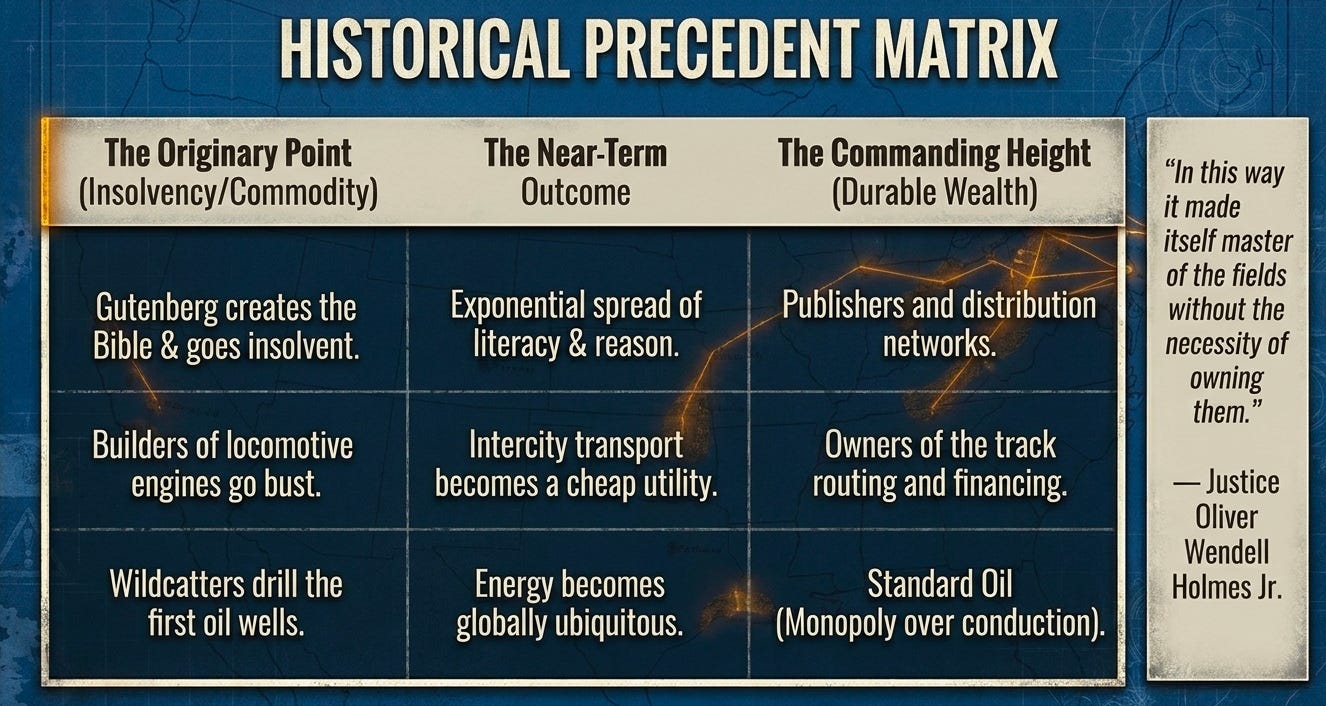
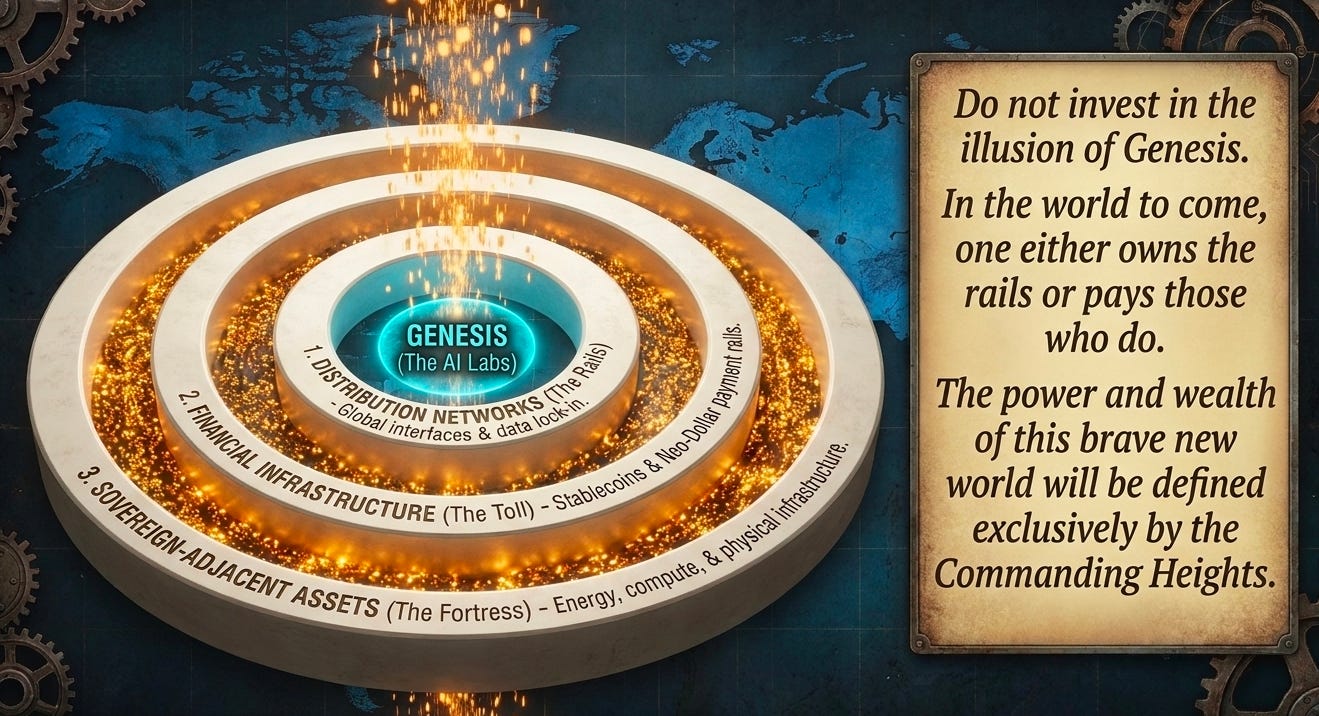
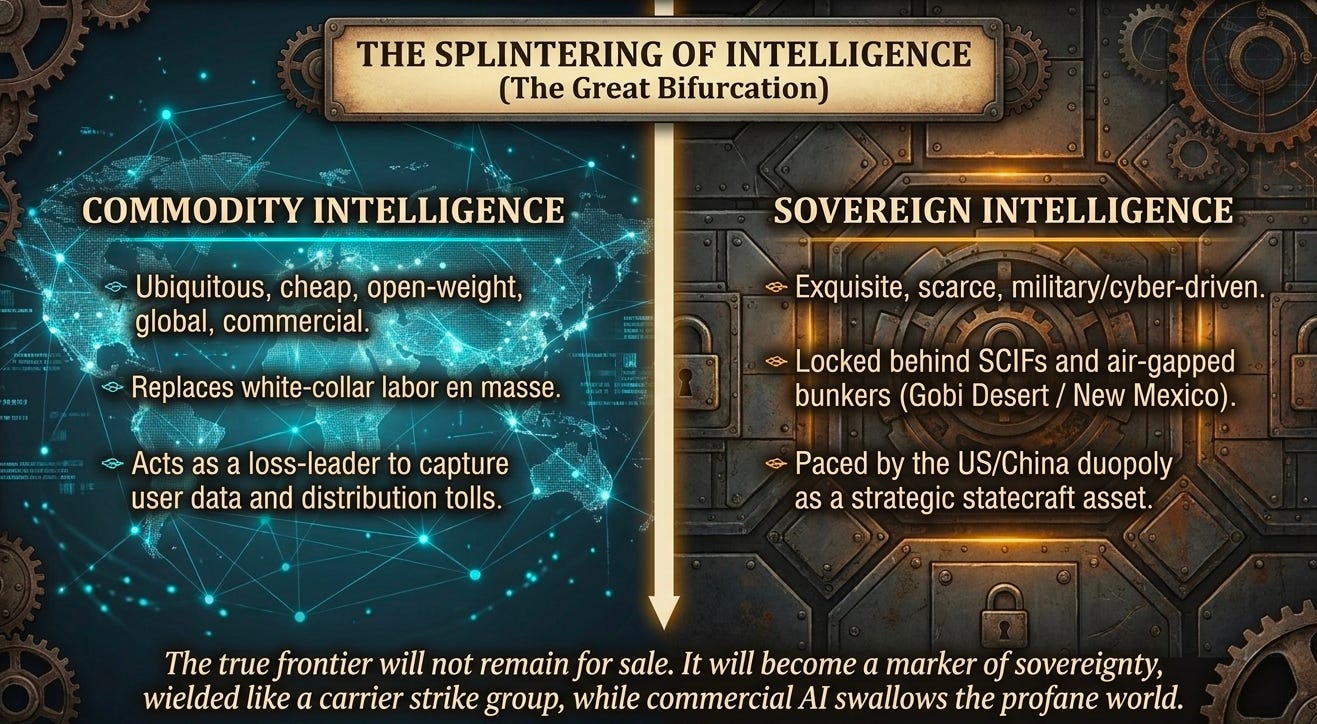
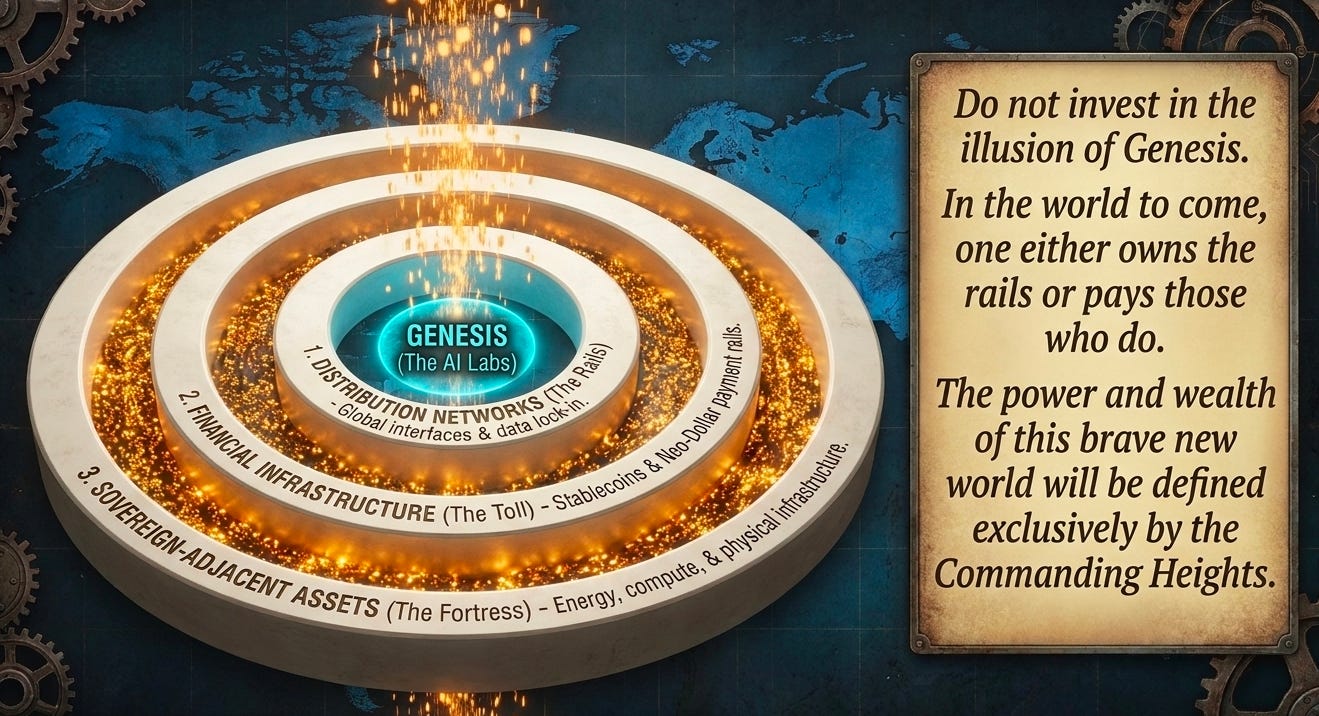
The authors don’t think the frontier becomes worthless. The very best models stay precious, but they become a matter of state (see idea 3). Everyday intelligence becomes a loss leader. The profit goes to whoever owns the routes it travels to reach people, such as messaging apps, payment rails and the data gathered along the way. As they put it, “one either owns the rails or pays those who do”.
The spending can’t stop, and Washington will make sure it doesn’t: The authors call the labs and hyperscalers that build and run models “Genesis”. Inside it, the usual capital cycle has broken. In most industries, falling returns slow investment. Here, a firm that drops behind the frontier strands everything it has already spent, so it keeps building long after returns sag. Each firm behaves rationally, and the group as a whole destroys capital. The bill is growing faster than the cash to pay it. America can no longer afford for the industry to fail. The authors expect:
equity stakes, or a single golden share, in the labs
Treasury support
a Fed that caps bond yields, as it did in 1942
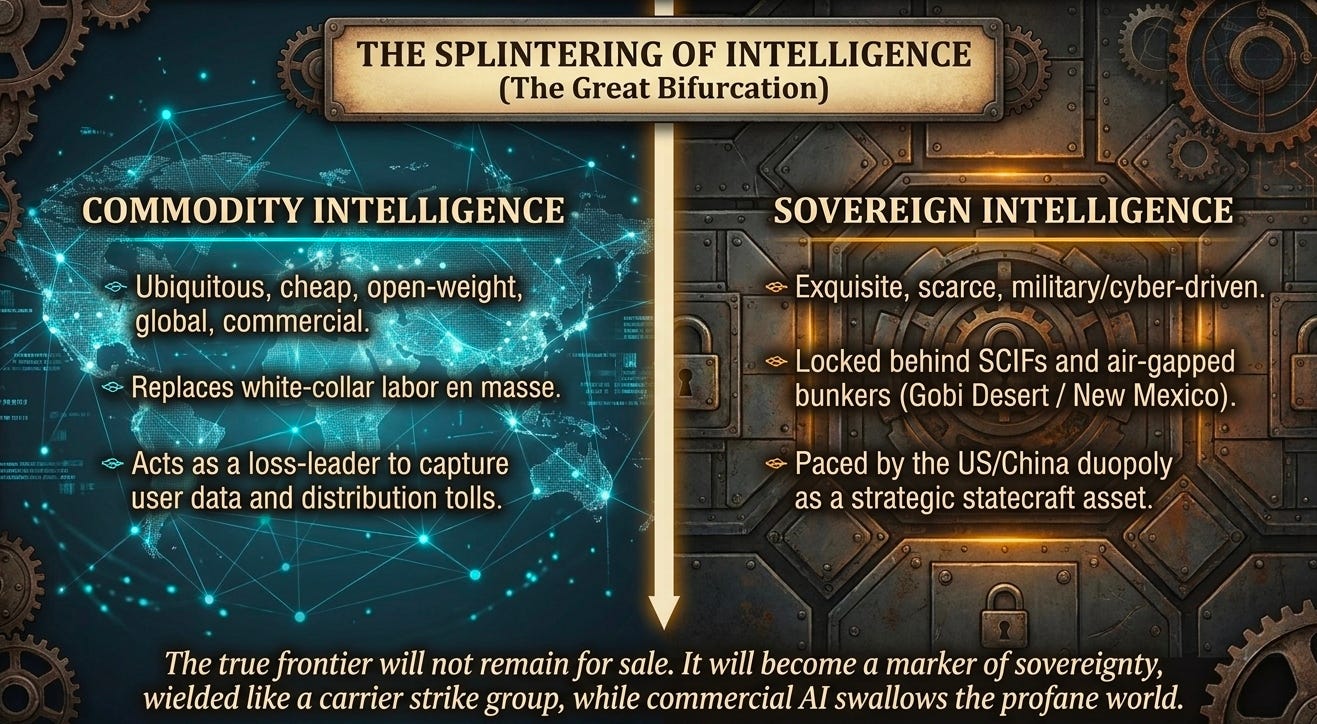
China wins by giving it away: In July, Moonshot released Kimi K3. It is an open-weight model, free to download and run, and it rivalled the American frontier on most tasks. The next day Xi Jinping said Chinese AI would stay open. Washington accused Moonshot of distillation, meaning training a cheaper model on a stronger one’s answers. It threatened sanctions, By the summer, Chinese models carried more than half the token volume on OpenRouter. The author’s explanation is about where people keep their savings. Chinese households hold 47% of their wealth in property, 24% in cash and only 15% in shares. The Shanghai Composite is up just 29% in a decade, against 254% for the S&P. A collapse in AI valuations wouldn’t touch Chinese pensions, so Beijing has no reason to protect its labs’ margins. The authors expect intelligence to split into 3 tiers:
a commodity tier, priced by China
a commercial frontier, sold by American labs at a premium
a sovereign frontier of the very best models, kept in air-gapped facilities and paid for by the state
Nobody will call it nationalisation. The labs will become what the English once called royal peculiars, institutions outside the normal rules and answerable to the Crown alone.
The ladder out of poverty is being pulled up: The essay opens with Ravi, a fictional IIT graduate in Bangalore who manages AI agents for 5 American insurers. His company’s margins keep rising. Then his division is halved, and 2 months later his keycard stops working. All those months of approving the agents’ work had been training his replacement. Malena, another invented character, is a designer in Buenos Aires. A model update lets her triple her client list. She is paid in a dollar stablecoin that holds its value while the peso loses a third a year. Her clients then move to a cheaper model trained partly on her preferences. The model maker and the payment network earn when she uses the tools, and they earn again when the tools replace her.
In America, licensing and legal liability protect most professionals, because somebody still has to sign off the work. The young are less lucky. Employment of 22-to-25-year-olds in AI-exposed jobs is 19% below trend, mostly because firms have stopped hiring them. Inside firms, the people who matter are becoming a small band of operators paid like capital.
The last cycle split people who owned assets from people who earned wages. The authors think this one splits the owners too. They expect the boom to show up in the Gulfstream order book long before it reaches the high street.
What if your safest holdings is this era’s newspapers: In 1984 Buffett called a dominant local paper one of the best businesses there was, and he was right for a generation. Berkshire’s Washington Post stake grew from $10.6m to $221m in 12 years. He kept buying dailies until 2012, $344m in all, and sold the lot in 2020 for $140m. Other giants have fallen the same way. The Pennsylvania Railroad was the world’s most valuable company in 1912 and filed America’s largest bankruptcy in 1970. Google, by contrast, listed in 2004 at about the size of Gannett and is now worth more than $4tn.
The authors define a Commanding Height as a scarce position that collects a toll on everything built on top of it. They give 2 tests for spotting one:
Durability. Bottlenecks come and go, from power to transmission to chips, and every fat margin pulls in the capital that competes it away. A Height survives that cycle.
Political safety. A toll that grows too rich attracts regulators, ratepayers, local councils and eventually the state. Antitrust, they point out, is a map of where wealth has piled up.
Then they turn to your portfolio and ask whether there is now a cheaper way around the toll your holdings collect.
Curious Thinking: For anything you own because something is scarce, ask what it will still be collecting once the shortage has gone?
C. The Kids Are All Right
These days every parent worries about their children. Will they be ok? Will they find a job? Can they afford a house one day? How much will I need to help them?
Philipp Carlsson-Szlezak, BCG’s global chief economist, wrote The Kids Are All Right: The Timeless Angst Over Young People and Money with Paul Swartz and Henry Rubin, and their claim is that the failing-generation story falls apart once you look at the data.
They blame three things for the gloom: inflated expectations, bad benchmarks and misleading narratives.

On The One Hundred Year Pivot, Demetri Kofinas and Grant Williams spoke to Philipp about why the kids will be alright.
The 5 BIG IDEAS:
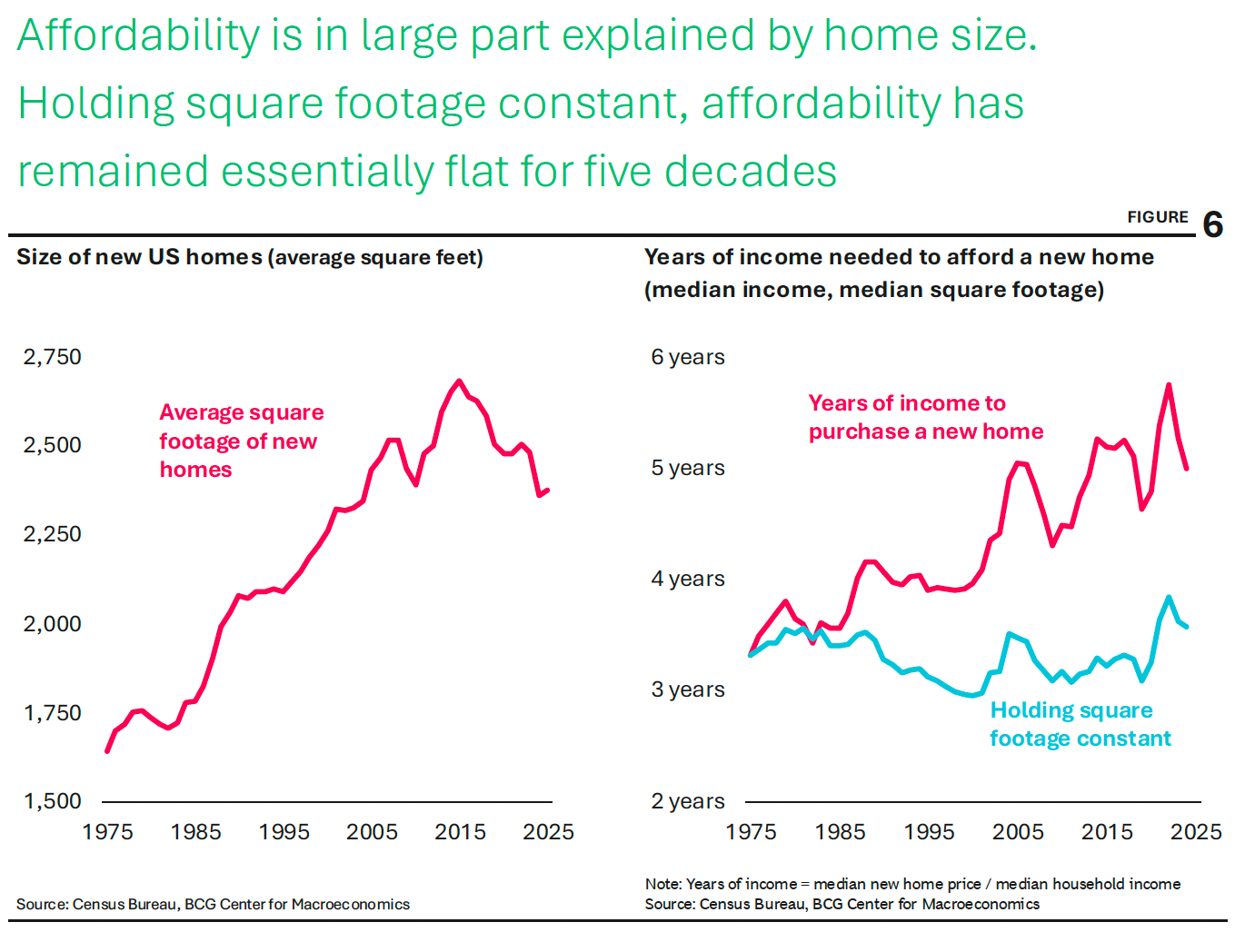
Compare them at the same age and the young are ahead: Philipp line’s up each generation at the same age, adjust for inflation, and compare. The oldest Gen Z workers earn a median income 25% higher than millennials did at that age and 50% higher than boomers. Put Gen Z and millennials together and their balance sheets are ahead too.
They got there by a different road, with more years in education, later starts on property and more money in shares. None of this means everyone is fine. In any given year about a quarter of American workers see their real wages fall. That was true in 2015 and in 2005 as well, so there is always a large, real group of people doing badly. They’re just never the whole picture.
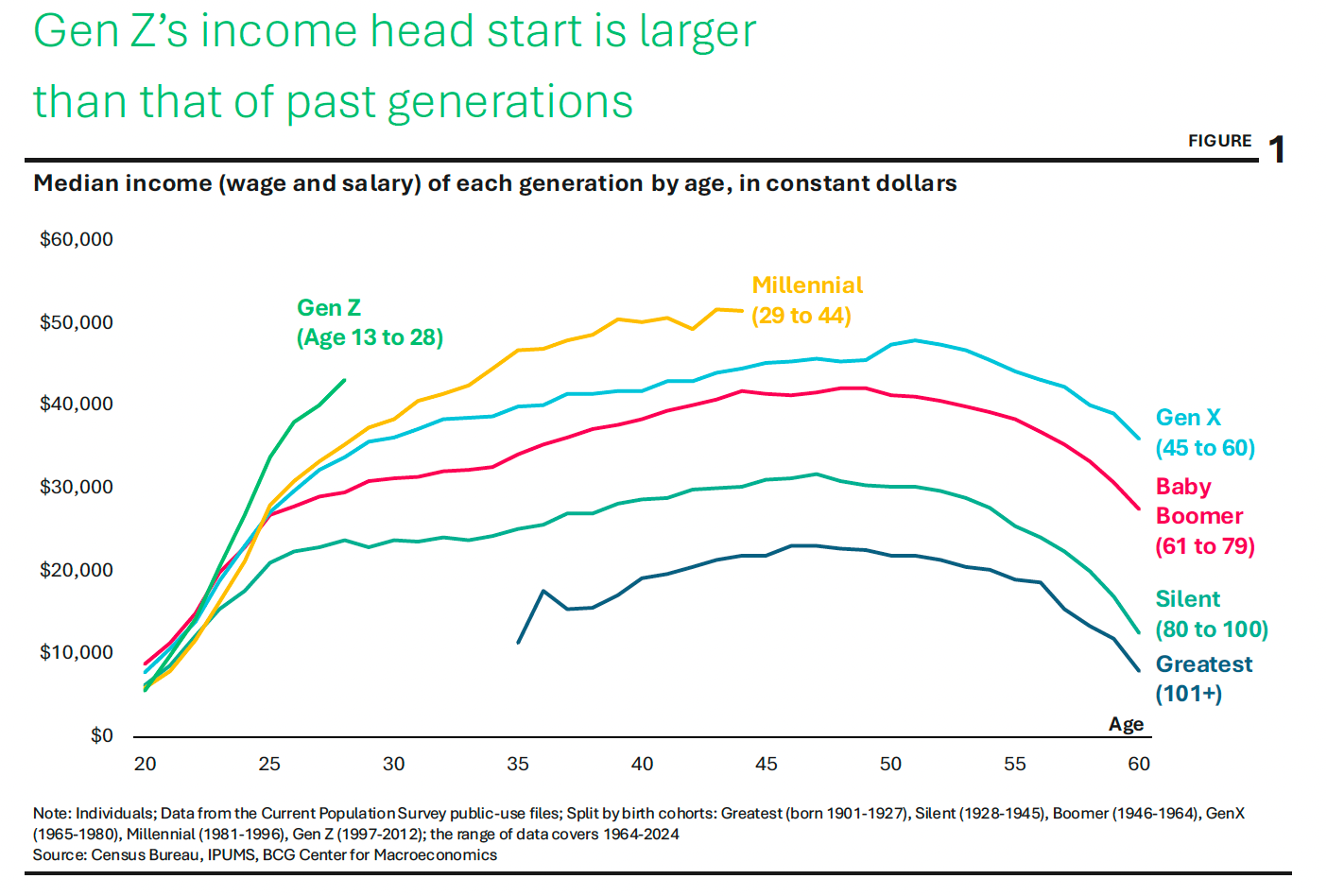
Gen Z is measuring themselves against the luckiest generation in history: Boomers had a tailwind that can only blow once. Women poured into the workforce, households went from one income to two, and wealth piled up fast. Their parents had lived through the Depression and the war, so the 1960s boom felt like a miracle. Gen X grew up in that shadow, and millennials and Gen Z inherited a benchmark nobody can repeat.
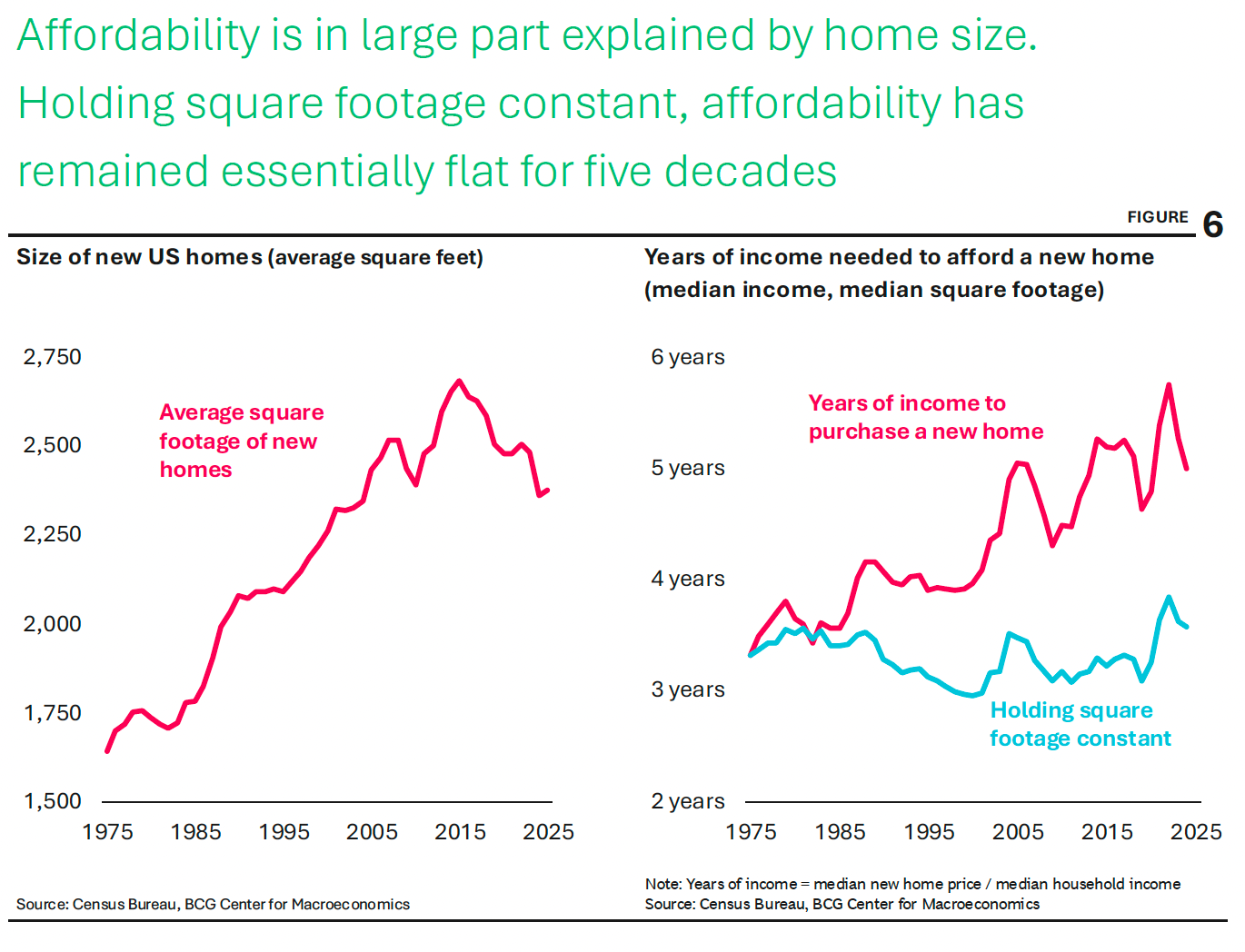
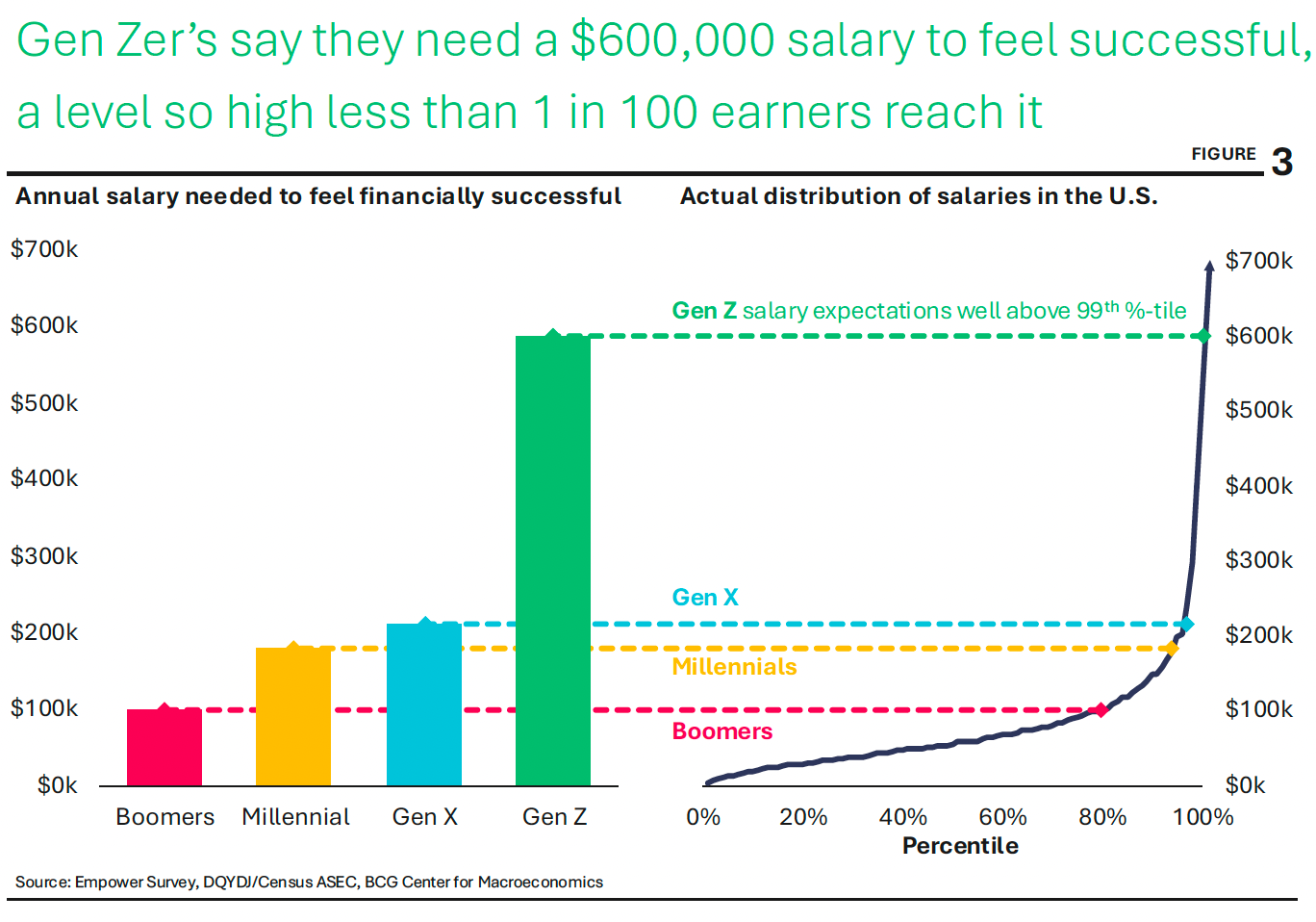
They’re also measuring themselves against a feed full of private jets: In a 2024 Empower survey, Gen Z said it takes about $588k a year to be financially successful. Boomers said just under $100k. Philipp points out that $588k puts you among the top 1% of American earners.
He blames the phone. Gen Z went through school with smartphones before parents or teachers had started to worry, and nobody helped them separate TikTok from real life. Yachts and jets became the reference point.
Curious Thinking: The young may look relatively equal partly because they haven’t inherited yet, and inheritance is one of the biggest drivers of American inequality. When boomer wealth passes down, the gaps inside Gen Z and millennials will probably widen. The nepo-baby resentment may be an early sign of something bigger.
Zero rates have made the present worth more than the future and pushed the young to spend instead of save. The numbers describe what people have, and behaviour follows what they believe. If enough Gen Z decide the house is out of reach and spend the deposit on $7 cappuccinos, the gloom could still make itself true when they get to 42.
D. The Death Bed Doctor
What really matters on your death bed?
Christopher Kerr was 12 when his father died of cancer at 41. The last time he saw him, his father was having one of the deathbed visions Chris would later spend his career studying. For many years he couldn’t say his father’s name.
Chris grew up in Toronto and qualified as a doctor, with a PhD in neurobiology and drifted into Hospice Buffalo in 1999. Med school had trained him to defeat death but taught him nothing about sitting with people who were dying. The nurses kept telling him that patients near the end were seeing things that mattered to them. From 2010 his team interviewed patients every day.
About 1,500 patients later, many of them on film, he runs the hospice as CEO and chief medical officer. He wrote Death Is But a Dream with Carine Mardorossian, an English professor at the University at Buffalo, and he has come through stage 4 cancer himself.
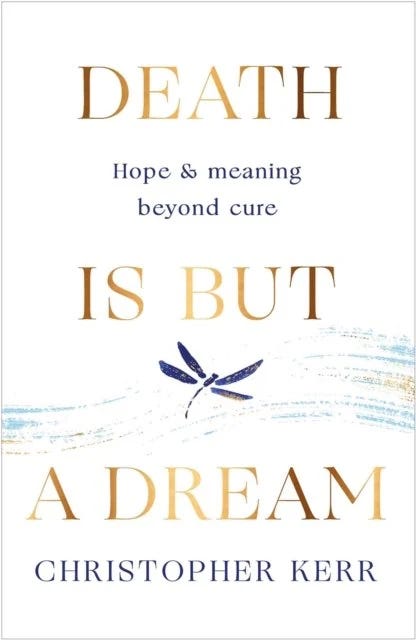
He sat down with Steven Bartlett on The Diary of a CEO.
The 3 BIG IDEAS:
The dying dream of the people who loved them: Nearly 90% of Kerr’s patients have vivid dreams or visions near the end, and they come more often in the final week or two. The guest list is very strict. Whoever loved them unconditionally shows up, and whoever held love back doesn’t.
At the end, nobody keeps score: Chris asked hospice patients to rank what mattered most, and asked medical students to guess. Patients put not being a burden first and time with family second. The students expected a meaningful life near the top, and patients put it 8th. Living as long as possible came 9th, and Kerr has never heard a dying patient ask for it. They want to live well for as long as they can. The blue-zone grandmother, he notes, isn’t dosing creatine after a cold plunge. She walks, eats plants and sees her friends. We all know what really matters, and yet we keep allocating our weeks somewhere else.
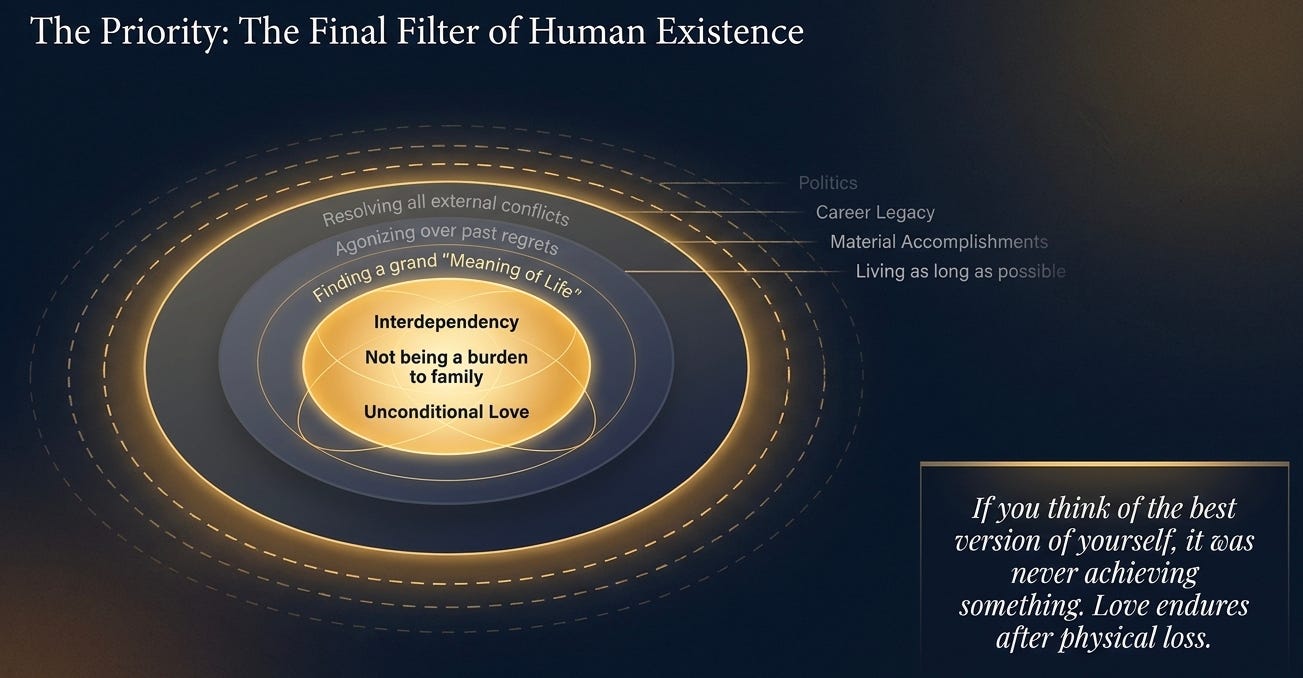
Hope changes shape right to the end: It starts as hope for a cure, becomes hope for comfort and time, and finally turns into hope for other people. Healthy people relate to Dylan Thomas urging his dying father to fight. Kerr’s patients are moving the other way, towards the people they lost.
Curious Thinking: The dying spend their last weeks with the people who loved them, in the chair by the bed or in a dream. Whose chair will you sit in and who will sit in yours?
With Love, Ahmed.
A Final Thought: Sosin’s test for a business is to give it unlimited, nearly free brainpower and see what’s left. Try it on yourself. Imagine everyone you know has the same genius on tap for 50 cents a month. What do you still have that’s yours? Kerr’s patients ran a version of that test in their last few weeks, and nobody’s answer had anything to do with being clever.
P.S. Could you do me a favor ? This email takes many hours to put together, including hours of sourcing, curating and writing. If it is helpful to you, then do me a favour and hit the “heart” button so I know it’s useful to you.